

LRRP / LRP / LRSD / LRS


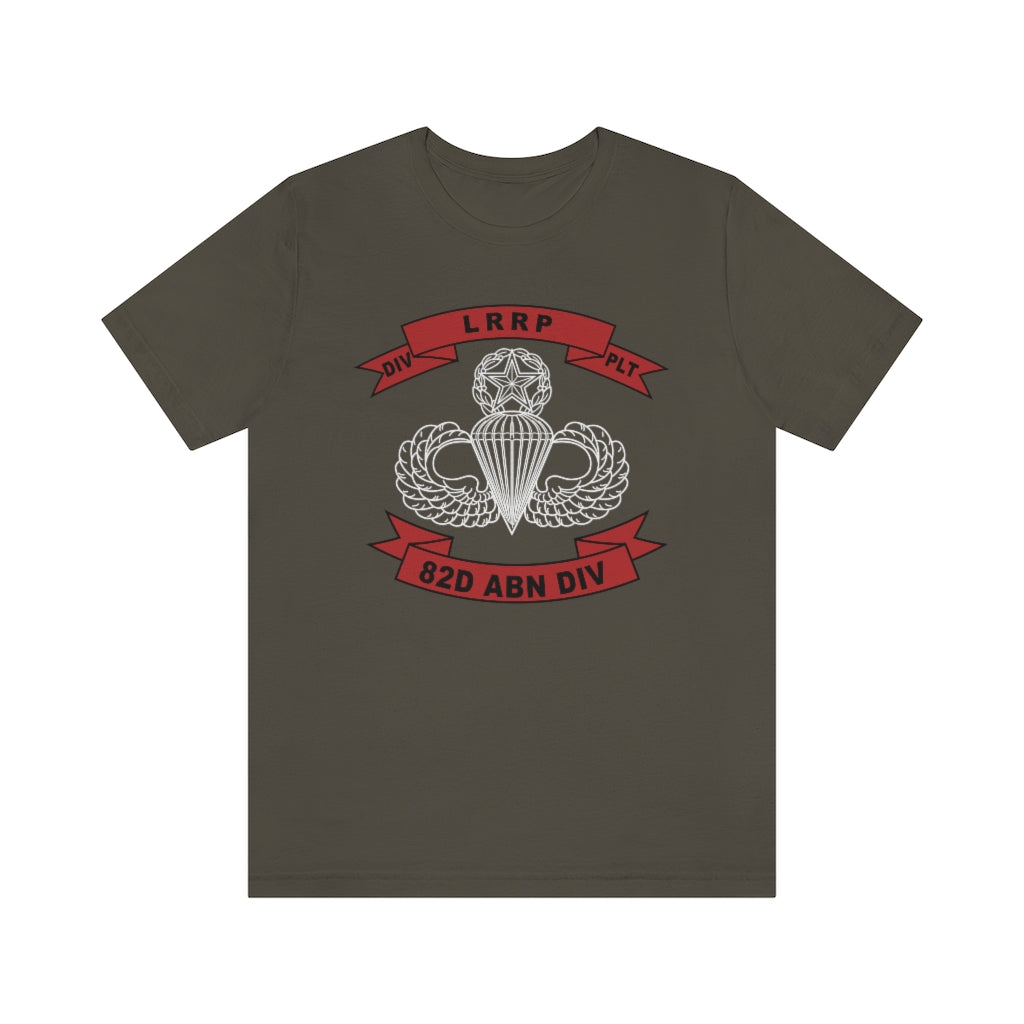

US Army Long-Range Reconnaissance & Surveillance (LRRP / LRP / LRSD / LRS)
Few Army capabilities have earned a reputation as quietly—and as permanently—as long-range reconnaissance and surveillance. Across decades, names changed and organizations shifted, but the mission stayed remarkably consistent: place small teams far forward, keep them hidden, and bring back the kind of information that changes what commanders do next. That information might be an enemy movement corridor, a supply route, a “pattern of life,” or confirmation that a suspected target is real. What made these units distinct wasn’t simply that they patrolled farther—it was how they operated: disciplined stealth, meticulous fieldcraft, patient observation, and reliable communications under the worst conditions.
On this page, “LRRP / LRP / LRSD / LRS” is used as an umbrella for the Army’s long-range ground reconnaissance lineage: Vietnam-era long-range patrol units, the post-Vietnam rebuild as long-range surveillance detachments, and the later standardized long-range surveillance units that served through the Iraq and Afghanistan era. WWII and Korea appear here as precursors—periods where the Army fielded deep reconnaissance and special reconnaissance concepts, even if the formal “LRRP/LRS” labels didn’t exist yet.
What the Acronyms Mean (and Why the Name Keeps Changing)
- LRRP (Long Range Reconnaissance Patrol): Widely associated with Vietnam, often spoken as “Lurp.” In practice, it describes small teams inserted beyond friendly lines to observe and report, avoiding decisive contact whenever possible.
- LRP (Long Range Patrol): Frequently used as the formal organizational label in Vietnam for companies and detachments aligned to divisions and separate brigades.
- LRSD (Long Range Surveillance Detachment): Post-Vietnam rebuild of deep surveillance, commonly aligned to divisions and often tied into intelligence structures.
- LRS (Long Range Surveillance): Later standardized term and force structure (detachments/companies) with defined doctrine, team composition, and mission sets—extending into OIF and OEF before the capability was largely removed from the force.
The terminology matters because each era reflects a different Army: Vietnam’s demand for forward reconnaissance; the Cold War requirement to watch avenues of approach; and the modern era’s blend of human reconnaissance with expanding technical ISR. But the operational “signature” across all eras remains recognizable: long-duration observation, strict light/noise discipline, rehearsed break-contact drills, and communications that can survive distance, terrain, and enemy pressure.
The Core Mission
Long-range ground reconnaissance teams exist to answer one deceptively simple question: What is really happening out there? Their value is that they can provide confirmation and context when maps, assumptions, and even aerial surveillance fall short. A long-range team does not “win” by closing with the enemy; it wins by remaining unseen long enough to report what the enemy is doing—and what the enemy is about to do.
Enduring Tasks
- Deep reconnaissance and surveillance: Observing named areas of interest, likely routes, assembly areas, and key terrain; tracking movement, logistics, and patterns over time.
- Target confirmation and target acquisition support: Locating and verifying targets and providing accurate information to support fires, air, or follow-on maneuver.
- Economy of force through information: Helping commanders avoid costly “search missions” and instead maneuver with precision.
- Limited direct action (exception, not the rule): Ambushes or actions on contact typically occur when required for survival or when commanders deliberately task them—always balanced against the risk of compromise.
- Specialized infiltration and extraction: Air, ground, and (for some units) water infiltration; helicopter insertion techniques and contingency extraction under threat.
The most common public misunderstanding is that long-range surveillance units are simply “infantry that patrols farther.” In reality, they are optimized for stealth, patience, and reporting. Their weapons matter, but their true differentiator is a culture of fieldcraft and discipline: camouflage that holds up at close range, movement that leaves minimal trace, and communications procedures that don’t betray their position.
Organization & Team Design (By Era)
Vietnam Era: LRP/LRRP Companies and Detachments
In Vietnam, the Army scaled long-range patrol capability rapidly. Organizations appeared at division and higher echelons, and separate brigades often employed patrol detachments. The structure varied by unit and time, but a common pattern included an operations element, a communications capability built to reach back from deep in enemy territory, and multiple patrol elements.
A defining institutional moment occurred in 1969: many of the Vietnam long-range patrol organizations were reorganized and redesignated as Ranger companies under the 75th Infantry (Ranger). These “Vietnam Ranger companies” are frequently associated with the long-range patrol identity of the war and preserve much of the historical lineage of LRRP/LRP organizations in that theater.
Post-Vietnam: LRSD (Long Range Surveillance Detachments)
After Vietnam, the Army’s long-range patrol capability diminished in scale, then later returned in a more formalized surveillance framework as LRSDs. These detachments were commonly aligned to divisions and often connected to intelligence structures, reflecting a shift toward reconnaissance as an intelligence problem: gather, confirm, and report with minimal signature. LRSDs maintained the small-team mentality but emphasized surveillance, communications, and stealth over aggressive contact.
Modern Era: LRS Units and Standardized Doctrine
In the 1990s through the 2010s, the Army further standardized long-range surveillance into LRS units. These organizations were designed around small teams (often six soldiers) capable of infiltrating, establishing hide sites, conducting long-duration observation, and transmitting actionable reports. Their utility persisted even as technology advanced, because a hidden team on the ground can answer questions that sensors sometimes cannot: subtle changes in activity, deception techniques, and the “human detail” that distinguishes a routine movement from an impending attack.
Selection, Training, and Culture
Long-range reconnaissance and surveillance work is unforgiving. The mission set demands physical endurance, calm under isolation, and the self-discipline to do “nothing” for long periods while remaining fully alert. Historically, units screened for maturity, fieldcraft, and reliability—qualities that matter when a mistake is not a paperwork problem but a compromise that can cascade into catastrophe.
Common Training Emphases
- Fieldcraft: concealment, camouflage, hide-site construction, noise/light discipline, tracking awareness, and movement techniques.
- Navigation: day/night land navigation, route planning, contingency planning, and redundancy under stress.
- Communications: disciplined reporting formats, brevity, antenna theory, emissions control, and procedures for compromised comms.
- Survival and evasion: immediate action drills, break-contact, casualty considerations, and exfiltration methods.
- Reconnaissance fundamentals: observation, sketching, range estimation, and the ability to describe what matters in a way a commander can use.
The culture that emerges from this training is distinct: competence without noise, pride without flash. Many veterans describe long-range reconnaissance as the art of being present without being perceived. That philosophy is the heart of the LRRP/LRS identity—and it is why mottos like “Eyes Behind the Lines” resonate so strongly with those who wore the tab, scroll, or distinctive insignia connected to these missions.
Actions by Conflict and Era
World War II: Precursors to Long-Range Reconnaissance
WWII did not feature U.S. Army units formally titled LRRP/LRSD/LRS, but it produced essential precedents in deep reconnaissance and special reconnaissance tradecraft. Small teams operated forward of conventional formations to collect information, conduct reconnaissance in denied areas, and enable larger maneuver and fires. These efforts form an important conceptual foundation: the Army learned that information gathered by small, skilled teams can shape outcomes far beyond their numbers.
Korea: Reconnaissance Under Harsh Conditions
Korea continued the evolution of aggressive reconnaissance and patrolling in difficult terrain and weather. While the mature LRRP/LRP force structure associated with Vietnam had not yet emerged, the conflict reinforced the need for forward reconnaissance and the value of trained soldiers capable of operating with limited support. In the broader lineage story, Korea serves as part of the bridge between WWII-era reconnaissance concepts and Vietnam-era institutional long-range patrol organizations.
Vietnam: The Defining Era of LRRP/LRP
Vietnam is where LRRP/LRP became a recognizable institution across the Army. The operational environment demanded information from beyond conventional lines: enemy movement along trails, base areas hidden in difficult terrain, and the need to locate and track forces that could disperse and reappear quickly. Long-range patrol teams were tasked to observe, report, and, when necessary, execute ambushes or break-contact actions in an environment where compromise could occur suddenly and recovery was never guaranteed.
The redesignation of many long-range patrol organizations as Ranger companies under the 75th Infantry (Ranger) in 1969 further cemented this era’s identity. For many veterans and historians, “LRRP” and “Vietnam Ranger company” are tightly linked—two expressions of the same core capability during the war’s most demanding reconnaissance missions.
Desert Storm: Long-Range Surveillance in a Fast-Moving War
By the time of Desert Storm, the Army had reintroduced long-range surveillance capabilities that could support large-scale maneuver in open terrain. The Gulf War highlighted the need to confirm enemy positions and movements across vast distances at high speed. In such a context, long-range surveillance elements provided ground truth and deep reconnaissance support that complemented other intelligence sources and enabled commanders to maneuver with confidence.
Somalia: Small-Unit Operations and the Value of Ground Truth
Somalia is often remembered through the lens of high-profile special operations raids and urban combat. In the broader long-range reconnaissance story, it underscores a persistent reality: reliable ground truth matters, and small teams operating with limited margin for error must rely on discipline, planning, and contingency thinking. The conflict reinforced lessons about operating in complex environments where visibility and “signature” can shift quickly, and where a small team’s success depends as much on preparation and communications as on marksmanship.
OIF and OEF: LRS in the Modern Battlefield
In Iraq and Afghanistan, long-range surveillance continued to contribute in ways that were sometimes invisible to those outside the community. While aerial ISR expanded dramatically, commanders still needed persistent observation from the ground—especially in terrain, weather, or human environments that complicated sensor coverage. LRS teams supported reconnaissance and surveillance missions that helped shape operations, validate intelligence, and provide context that technology alone could not always supply.
This era also intensified the debate about force structure: as technical ISR platforms multiplied, some planners questioned whether dedicated long-range surveillance units were still needed. The eventual reduction and deactivation of many LRS units in the late 2010s marked the end of a distinct organizational chapter, even as the need for disciplined reconnaissance and ground truth remained.
Historical Organization
- Vietnam-era LRP companies and detachments: long-range patrol organizations aligned to divisions and separate brigades that executed deep reconnaissance and surveillance missions.
- Vietnam Ranger companies (75th Infantry (Ranger)): long-range patrol organizations redesignated as Ranger companies in 1969, preserving lineage and identity closely associated with LRRP missions in Vietnam.
- Post-Vietnam LRSD: division-level long-range surveillance detachments focused on stealthy observation and reporting.
- Modern LRS detachments/companies: standardized long-range surveillance organizations that deployed through the Iraq and Afghanistan era and carried the mission into the 21st century.
Legacy
Long-range reconnaissance and surveillance is a paradox: its successes often remain uncelebrated because the mission is to be unseen and to influence events without drawing attention. Yet the legacy is unmistakable. From the Vietnam patrol teams that wrote the book on deep stealth reconnaissance, to later surveillance detachments and modern LRS units that carried the mission into Iraq and Afghanistan, the LRRP/LRS tradition represents a very specific kind of soldiering—one defined by patience, precision, and professionalism.
“Eyes Behind the Lines” is more than a motto. It describes an ethic: be present, be accurate, be disciplined, and bring back what the force needs to know. That ethic is why these units continue to hold a powerful place in Army history—and why the insignia, mottos, and heritage still resonate with those who lived it.
Sources:
- Eyes Behind the Lines: US Army Long-Range Reconnaissance and Surveillance Units, Combat Studies Institute Press, James F. Gebhardt
- FM 3-55.93, Long-Range Surveillance Unit Operations, U.S. Army field manual
- U.S. Army historical lineage and honors materials relevant to Vietnam-era LRP/LRRP redesignations
- Contemporary reporting and official public-affairs coverage discussing LRS force-structure changes and deactivations in the late 2010s