

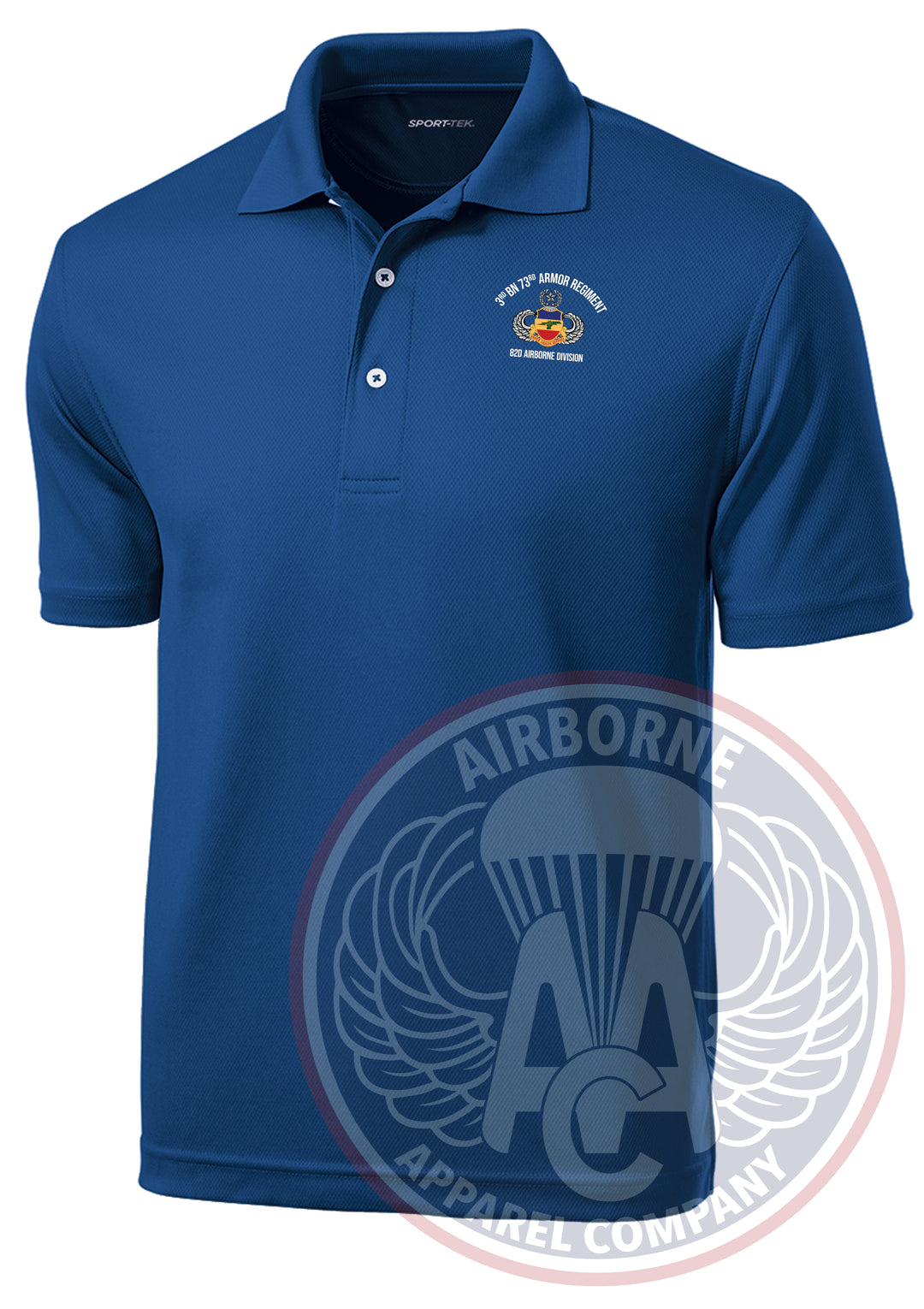

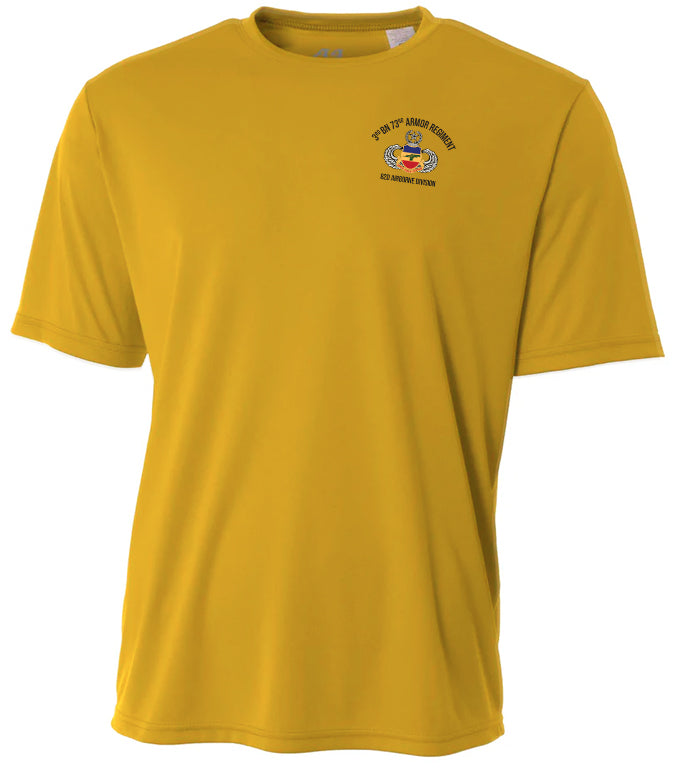
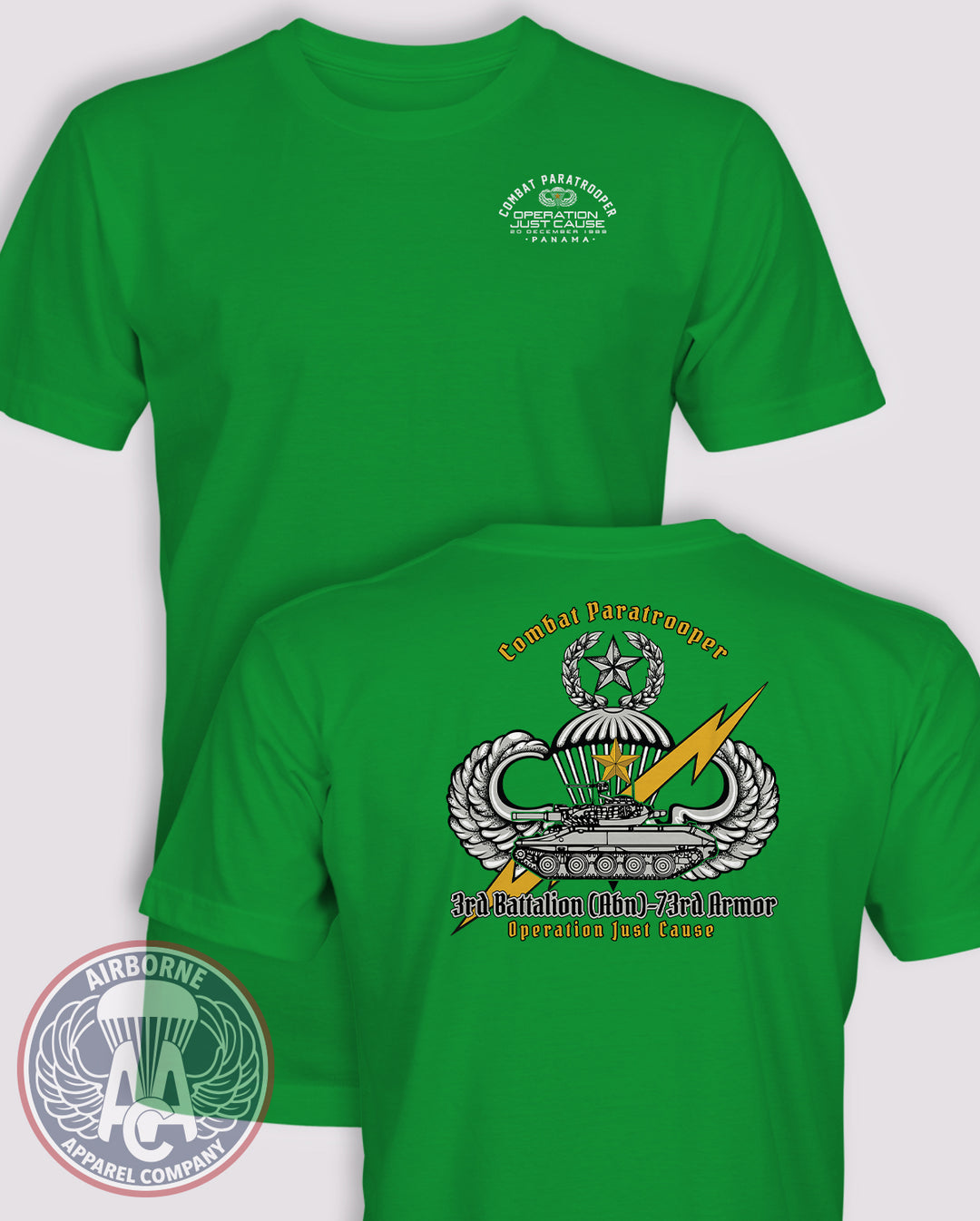
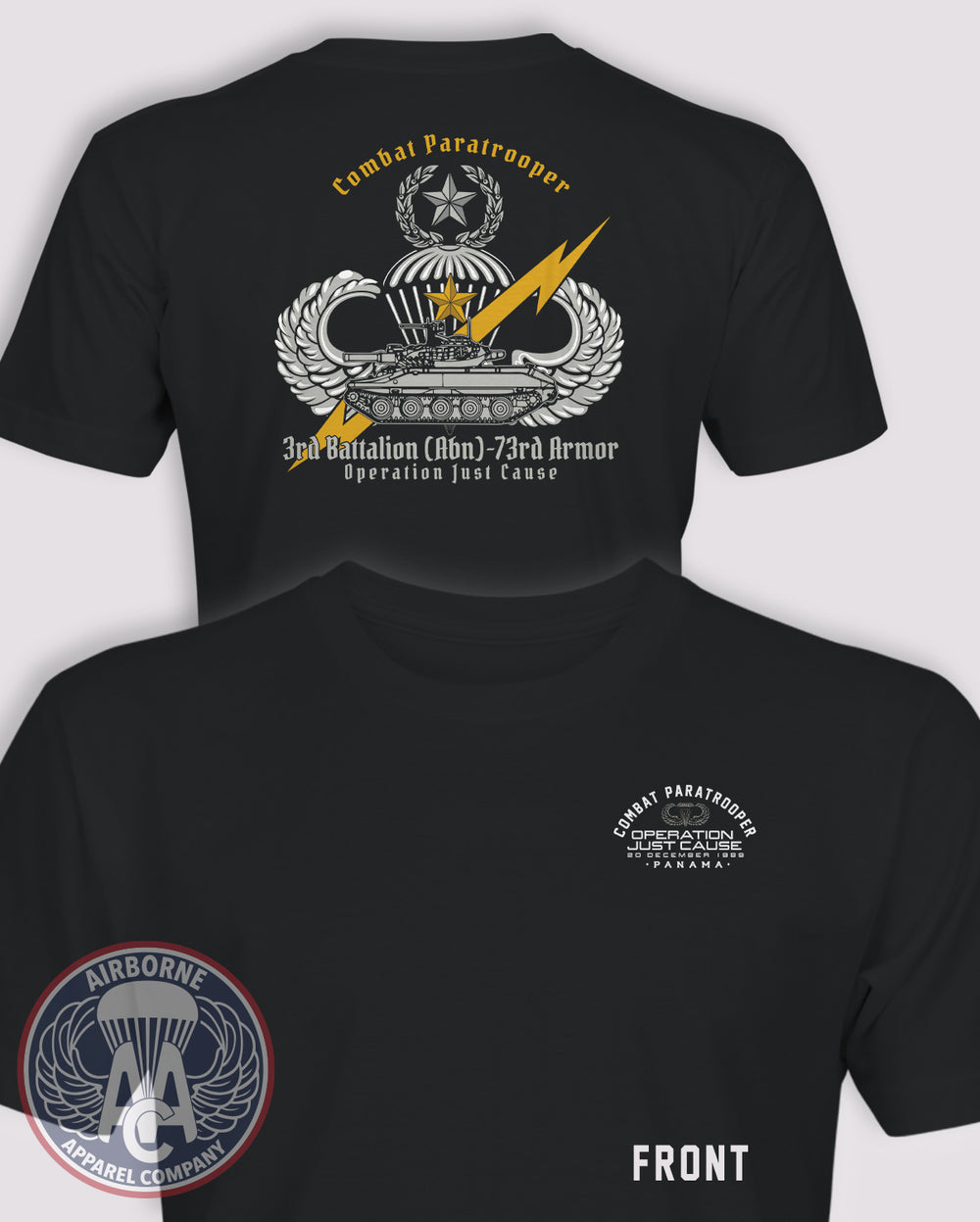
3rd Battalion 73rd Armor (ABN)

    Filter
      5 products

      3-73 ARMOR AT A GLANCE

      "Honor, Fidelity, Courage"

      Primary Weapon System

      M551 Sheridan Armored Reconnaissance/Airborne Assault Vehicle (AR/AAV). Featured a 152mm gun capable of firing conventional rounds and Shillelagh ATGMs.

      Organization Structure

      4 Companies Headquarters & Headquarters Co. (HHC), Co. A, Co. B, Co. C. Highly specialized airborne-qualified armored crews.

      Disposition

      Deactivated Deactivated in 1997 following the retirement of the M551 and the cancellation of the M8 Armored Gun System.

      3rd Battalion, 73rd Armor Regiment

      The 3rd Battalion, 73rd Armor Regiment (3-73 AR) holds a uniquely legendary status in the annals of United States Army history. As the sole airborne armor battalion in the conventional military forces for much of the Cold War and post-Cold War era, the 3-73 AR provided the 82nd Airborne Division with immediate, droppable, heavy firepower. Their motto, "Honor, Fidelity, Courage", perfectly encapsulated their mission to drop into hostile territory and bring armored shock effect to the airborne infantry fight.

      History and Development

      The lineage of the 73rd Armor Regiment traces back to the 73rd Tank Battalion, which saw extensive combat during World War II. However, the unique identity of the 3rd Battalion was forged in the decades following the war, coinciding with the Army's desire to provide forcible entry airborne forces with integral armor support. Troops underwent rigorous airborne training at Fort Benning, GA before joining the ranks of the unit stationed at Fort Bragg, NC.

      Throughout the 1970s and 1980s, the battalion became the premier proving ground for airborne armor concepts. The fundamental challenge of the 3-73 AR was mastering the delicate balance between the heavy, logistical realities of an armored unit and the rapid, light-footprint requirements of the 82nd Airborne Division.

      Weapon Systems Implementation: The M551 Sheridan

      The history of the 3-73 AR cannot be separated from its primary weapon system: the M551 Sheridan Armored Reconnaissance/Airborne Assault Vehicle (AR/AAV). While the rest of the Army transitioned to heavier main battle tanks like the M60 and eventually the M1 Abrams, the 3-73 AR retained the Sheridan due to its unique air-droppable capability.

      Technical Implementation:

      • Lightweight Chassis: The Sheridan utilized an aluminum alloy hull, keeping its combat weight around 16 tons—light enough to be dropped via parachute from C-130 and C-141 transport aircraft.
      • 152mm Main Gun/Launcher: To provide a lightweight vehicle with tank-killing capability, the Sheridan was equipped with an M81 152mm gun/launcher. This system could fire conventional high-explosive anti-tank (HEAT) rounds, but its true advantage was the capability to fire the MGM-51 Shillelagh anti-tank guided missile.
      • Airborne Delivery: The 3-73 AR mastered two methods of aerial delivery. The primary method was Heavy Drop (parachuting the tank on a specialized pallet). They also utilized the Low Altitude Parachute Extraction System (LAPES), where the tank was pulled out of the back of a low-flying cargo plane by drogue chutes, sliding to a halt on the drop zone.

      Organization and Subordinate Units

      The structural organization of the 3-73 AR was tailored to fit the airborne mission, acting as a force multiplier for the light infantry brigades of the 82nd Airborne Division at Fort Bragg, NC. At its peak operational strength, the battalion was composed of:

      • Headquarters and Headquarters Company (HHC): Provided command, control, medical, and specialized scout support.
      • Company A (Alpha): Line armor company equipped with Sheridans.
      • Company B (Bravo): Line armor company equipped with Sheridans.
      • Company C (Charlie): Line armor company equipped with Sheridans.

      Unlike standard heavy armor battalions, the 3-73 AR's logistics and maintenance elements had to be highly mobile and capable of sustaining tank operations in an airhead with zero initial ground lines of communication.

      Events of Historical Significance

      December 1989: Operation Just Cause (Panama)

      This operation cemented the 3-73 AR in military history. During the invasion of Panama, a platoon of Sheridans from Company C was parachuted into combat alongside the 82nd Airborne Division. Ten M551s were successfully heavy-dropped onto Torrijos-Tocumen Airport. Despite some vehicles suffering damage from the drop, they were quickly put into action. The psychological and kinetic effect of having armored vehicles breaching roadblocks and reducing fortified Panamanian Defense Force positions was critical to the operation's rapid success. It remains the only combat parachute assault of tanks in U.S. Army history.

      August 1990: Operation Desert Shield / Desert Storm

      Following Iraq's invasion of Kuwait, the 82nd Airborne Division was the first major ground force deployed to Saudi Arabia—the proverbial "line in the sand." The light infantry was highly vulnerable to Iraqi heavy armor. The 3-73 AR was rushed to the theater, providing the only organic armor capability for the division until heavy mechanized units could arrive via sea lift weeks later. Their presence provided a critical deterrent against an Iraqi thrust into Saudi Arabia.

      Structural Changes, Modernization Attempts, and Disposition

      By the mid-1990s, the M551 Sheridan was severely aging. Maintenance was becoming prohibitively difficult, and its armor protection was deemed inadequate for modern battlefields. The Army developed the M8 Armored Gun System (AGS) to replace it. The 3-73 AR was slated to be the first unit equipped with the M8, which promised a modern 105mm gun, modular armor, and continued air-droppability.

      However, in 1996, the M8 AGS program was abruptly canceled due to severe budget constraints. Left with an obsolete vehicle and no replacement, the Army made the difficult decision to deactivate the airborne armor capability.

      Current Disposition: The 3rd Battalion, 73rd Armor Regiment was officially deactivated in July 1997. The Sheridans were retired, and the 82nd Airborne Division was left without organic light tanks. While the lineage and honors of the 73rd Cavalry/Armor continue in other modular formations (such as the 4th Squadron, 73rd Cavalry Regiment, which serves as a reconnaissance element for the 82nd Airborne), the unique "Airborne Armor" heavy-drop tank battalion structure remains a closed, highly distinguished chapter of U.S. military history.

      3rd Battalion, 73rd Armor Regiment: Historical Lineage, Doctrinal Evolution, and the Airborne Armor Paradigm

      The integration of heavy armored firepower into rapidly deployable airborne forces has been a persistent doctrinal challenge for the United States Army. At the center of this historical and tactical friction is the 3rd Battalion, 73rd Armor Regiment (3-73 Armor). As the Army’s sole airborne-qualified armor battalion for much of the late Cold War and the post-Cold War era, 3-73 Armor represented a unique, highly specialized capability: the ability to project armored shock action globally within hours of notification to support light infantry formations.[1, 2]

      This exhaustive research report delineates the lineage, structural evolution, combat history, and weapons implementation of the 73rd Armor Regiment. Furthermore, it comprehensively analyzes the recent, tumultuous attempts to revive organic airborne armor through the Mobile Protected Firepower (MPF) program—culminating in the M10 Booker test detachment—and the broader strategic implications of its abrupt 2025–2026 cancellation. The historical trajectory of this regiment serves as a definitive case study in the tension between strategic airlift mobility and tactical armored survivability.

      1. Genesis and World War II Lineage: The 756th Tank Battalion

      The modern 73rd Armor Regiment traces its direct lineage to the mobilization period preceding the United States' entry into World War II. The unit was initially activated on June 1, 1941, at Fort Lewis, Washington, originally designated as the 76th Tank Battalion (Light), before being renumbered as the 756th Tank Battalion in May of that same year.[3, 4, 5] From its inception, the battalion was designed as an independent tank unit intended to provide direct infantry support, a doctrinal concept that would define the unit's employment for decades. The battalion adopted the motto "Honor, Fidelity, Courage," which would endure through its various redesignations.[3, 6]

      1.1 Combat Operations in the European and Mediterranean Theaters

      The 756th Tank Battalion deployed to North Africa on January 24, 1943, marking the beginning of an extraordinary period of nearly continuous combat operations that would span 26 of its 32 months overseas.[4, 5] The battalion's tactical flexibility was immediately tested during the Italian campaign. Following the Allied landings at Salerno on September 17, 1943, the 756th operated in direct support of infantry formations, navigating the restrictive mountainous terrain of the Italian peninsula, which severely limited traditional massed armored maneuverability.[4]

      The unit’s structural adaptability was further demonstrated during preparations for Operation Dragoon—the Allied invasion of Southern France. In 1944, two companies of the 756th Tank Battalion were re-equipped with specialized Duplex Drive (DD) M4 Sherman tanks, granting them amphibious capabilities.[3] On August 15, 1944, attached to the 3rd Infantry Division, the battalion executed an amphibious assault near St. Tropez.[3] The integration of armor directly onto the landing beaches provided critical direct-fire support that suppressed German coastal defenses, enabling the rapid inland push up the Rhone Valley.[3]

      The battalion's advance continued relentlessly across Western Europe, eventually reaching Strasbourg by November 26, 1944.[3] In early 1945, the 756th engaged in intense, close-quarters armored combat during the reduction of the Colmar Pocket—a heavily fortified German bridgehead on the western bank of the Rhine.[3] The tactical implementation of the M4 Sherman in these environments required intricate, highly coordinated maneuvers with dismounted infantry to clear anti-tank ambushes in ruined urban centers and dense forests.

      On March 26, 1945, the battalion once again utilized its DD Shermans to execute a fiercely contested amphibious crossing of the Rhine River, ultimately driving into southern Germany and concluding the war near Salzburg, Austria.[3] The exceptional valor of the unit was codified by the posthumous awarding of the Medal of Honor to two of its officers, Second Lieutenant Raymond Zussman and Second Lieutenant James L. Harris, for their conspicuous gallantry in the European theater.[3] The 756th Tank Battalion was briefly inactivated on February 8, 1946, at Camp Kilmer, New Jersey, before the escalating geopolitical tensions of the Cold War necessitated its rapid reconstitution.[6]

      2. The Korean War and the 73rd Heavy Tank Battalion

      The post-war demobilization was extremely short-lived. On August 1, 1948, the unit was reactivated at Fort Benning, GA, and reorganized as the 756th Heavy Tank Battalion, assigned to the 3rd Infantry Division.[6, 7] However, in July 1950, just weeks after the outbreak of the Korean War, the battalion was reorganized, redesignated as the 73rd Tank Battalion, and relieved from its assignment to the 3rd Infantry Division, eventually being attached to the 7th Infantry Division on November 10, 1951.[5, 6]

      2.1 Armor Implementation in the Korean Peninsula

      The Korean War presented a drastically different operational environment than the plains of Western Europe or the deserts of North Africa. The 73rd Heavy Tank Battalion deployed to the peninsula equipped primarily with M4 Sherman and the much heavier, highly capable M26 Pershing tanks.[3] Early in the conflict, elements of the battalion, particularly Company A, also utilized the M24 Chaffee light tank, which possessed inferior armor and armament but offered superior mobility in the restrictive, mud-choked valleys of the Korean landscape.[8]

      The tactical implementation of the M26 Pershing by the 73rd Tank Battalion was vital during the grinding, static phases of the war. The Pershing's 90mm main gun provided overmatching firepower against the Soviet-supplied T-34/85 tanks utilized by the North Korean and Chinese Communist Forces (CCF). However, the extreme mountainous terrain of Korea forced armor into highly predictable valley avenues of approach, negating the mobility advantage of the tank and transforming armored units into mobile pillboxes delivering direct artillery support for entrenched infantry.[8]

      The battalion's defining engagement occurred during the grueling defense of White Horse Mountain (Hill 395) in October 1952. While the primary defense of the crest was conducted by the Republic of Korea (ROK) 9th Infantry Division, the 73rd Tank Battalion provided indispensable direct-fire support.[9] A company from the 73rd maneuvered along the left flank of the mountain, coordinating closely with the 30th ROK Infantry Regiment to deliver continuous harassing and enfilading fire against successive waves of CCF assaults.[9] The ability of the 73rd's armor to shatter Chinese infantry formations before they could breach the allied lines demonstrated the absolute lethality of armor-infantry integration in complex terrain.

      The battalion participated in every major campaign of the Korean War, spending three years in continuous combat operations. The unit's exceptional performance earned it three Republic of Korea Presidential Unit Citations, which are permanently represented by the Taeguk on the unit’s distinctive heraldry and distinctive unit insignia.[5, 7] Following the armistice, the battalion maintained a forward presence near the Demilitarized Zone at Camp Beavers—a facility named in honor of Captain Harold Beavers of the 73rd, who was posthumously awarded the Silver Star for valor on September 21, 1950.[10] The 73rd Tank Battalion was formally inactivated in Korea on July 1, 1957, and relieved from its assignment to the 7th Infantry Division.[5, 6]

      Historical Era Unit Designation Primary Assigned Command Key Weapons Systems Major Combat Theaters
      1941–1948 756th Tank Battalion 3rd Infantry Division / Independent M4 Sherman, DD Sherman North Africa, Italy, France, Germany
      1948–1950 756th Heavy Tank Battalion 3rd Infantry Division M26 Pershing, M24 Chaffee Continental United States
      1950–1957 73rd Heavy Tank Battalion 7th Infantry Division M4 Sherman, M26 Pershing Korean Peninsula

      3. The Cold War Paradigm and the Birth of Airborne Armor

      As the Cold War matured and the threat of Soviet mechanized warfare in Europe escalated, the United States Army reorganized its historical lineages under the Combat Arms Regimental System (CARS). On October 2, 1962, the 73rd Armor was designated as a parent regiment under this system.[6] The 1st Battalion, 73rd Armor (1/73 Armor) was activated in 1963 and served as a forward-deployed deterrent force.[6, 11] It spent significant time in West Germany at Panzer Kaserne in Boblingen as a 1st Infantry Division Forward unit, and also rotated back to South Korea, stationed at Camp Beavers from 1963 to 1971 to counter potential Warsaw Pact or North Korean aggression.[6, 11]

      Simultaneously, the Army was grappling with a critical strategic vulnerability within its rapid response forces. The 82nd Airborne Division possessed unmatched strategic mobility, capable of deploying a brigade anywhere in the world within 18 hours. However, this force severely lacked organic, heavy direct-fire capabilities upon landing. Paratroopers were exceptionally vulnerable to enemy mechanized forces immediately following an airborne insertion. To rectify this glaring operational gap, the 4th Battalion, 68th Armor (Airborne) was activated at Fort Bragg, NC, in 1968.[12]

      3.1 The 1984 Transition: 4-68 Armor to 3-73 Armor

      The 4-68 Armor provided the 82nd Airborne Division with a dedicated armor element for over a decade. However, to align the Army's regimental system more consistently across the armor branch while maintaining an unbroken airborne armor capability, a major administrative and structural reorganization occurred in 1984. On March 4, 1984, the 4th Battalion, 68th Armor was inactivated, and its personnel, equipment, and highly specialized airborne mission were immediately reflagged as the 3rd Battalion, 73rd Armor Regiment (Airborne).[6, 12, 13]

      This transition ensured that the 82nd Airborne Division retained its dedicated parachute-qualified tank battalion without any loss of operational readiness.[2, 13] As the only airborne-qualified armor battalion in the entire U.S. Army, 3-73 Armor occupied a highly specialized, elite niche.[2] The unit's motto, "Honor et Courage," and its nickname, "Airborne Thunder," reflected its dual identity—bridging the austere, light-infantry culture of the airborne paratrooper with the heavy, mounted culture of the conventional armor branch.[2] In January 1988, the regiment was withdrawn from CARS and reorganized under the United States Army Regimental System (USARS), maintaining its headquarters at Fort Bragg, NC.[6]

      4. Structural Organization of 3-73 Armor in the Late Cold War

      During the late 1980s and into the 1990s, the physical structure of 3-73 Armor reflected its mandate to balance heavy firepower with the strict limitations of strategic airlift. The battalion operated as a divisional asset under the Division Support Command of the 82nd Airborne Division.[14]

      Unlike traditional heavy armor battalions that fought as massive, consolidated fists, the four tank companies of 3-73 Armor were highly decentralized. Doctrinally, the battalion was considered a Corps-level asset in terms of its strategic utility, and it planned to have its individual companies placed under the operational control of the division's light infantry brigades during combat operations.[15] This task-organization allowed a single tank company to support a parachute infantry regiment, pushing armor down to the lowest possible tactical level.

      An analysis of the North Atlantic Treaty Organization (NATO) Order of Battle in 1989 reveals the exact, highly specialized equipment footprint required to sustain an airborne armor battalion. The logistical tail was intentionally constrained to ensure the entire battalion could be moved via Air Mobility Command.

      Equipment Type Quantity Assigned to 3-73 Armor (1989) Tactical Purpose / Function
      M551A1 Sheridan 58 Primary Main Battle Tank; Airborne Assault Vehicle
      M113 Armored Personnel Carrier 14 Mechanized infantry support and medical evacuation
      HMMWV (.50 Caliber Mounted) 7 High-mobility route reconnaissance and scout operations
      M106 Mortar Carrier 6 Tracked indirect fire support (typically 4.2-inch mortars)
      M577 Command Post Vehicle 4 Mobile, tracked tactical operations center
      M47 Dragon Anti-Tank Missile 6 Dismounted, man-portable anti-armor defense

      This constrained table of organization and equipment (TO&E) dictated how 3-73 Armor trained and fought. The troops regularly participated in large-scale airborne assaults and live-fire exercises, honing rapid deployment and armored tactics that were entirely unique among U.S. Army units.[1]

      5. Weapons Systems Implementation: The M551 Sheridan

      The operational identity, tactical employment, and ultimate historical legacy of 3-73 Armor were inextricably linked to its primary weapon system: the M551 Sheridan Armored Reconnaissance/Airborne Assault Vehicle (ARAAV).[16] While the rest of the Army's armored cavalry units systematically discarded the Sheridan following the Vietnam War due to its myriad mechanical and defensive flaws, the 82nd Airborne Division retained it simply because it was the only armored platform in the global inventory capable of being airdropped.[17, 18]

      5.1 Technical Specifications and Inherent Vulnerabilities

      The M551 Sheridan was an exercise in extreme engineering compromise, designed to balance massive offensive firepower with severe weight restrictions required for aerial delivery. It was armed with a massive 152mm M81 gun/launcher capable of firing conventional high-explosive anti-tank (HEAT) rounds, devastating canister rounds for anti-personnel use against massed infantry, and the MGM-51 Shillelagh anti-tank guided missile.[19, 20, 21] This unique armament provided paratroopers with the critical ability to destroy bunkers, concrete fortifications, and enemy armor—capabilities completely absent in a standard light infantry formation.[2] The vehicle was also equipped with a 7.62mm coaxial machine gun and a commander's.50 caliber pintle-mounted machine gun for localized defense.[21]

      However, to keep the vehicle's combat weight under 16 tons to ensure air transportability, the hull was constructed entirely of aluminum armor.[17, 19] This design parameter rendered the Sheridan highly vulnerable to heavy machine-gun fire, rocket-propelled grenades, and anti-tank mines. In combat environments, the aluminum hull offered no more ballistic protection than an M113 armored personnel carrier.[19] Furthermore, the vehicle utilized combustible, uncased ammunition for its 152mm main gun. A penetrating hit to the vehicle could easily ignite the caseless propellant stored inside the cramped turret, resulting in catastrophic internal explosions. Consequently, paratrooper crews developed acute situational awareness and frequently resorted to unauthorized field modifications, such as strapping hundreds of pounds of sandbags to the front slope to artificially augment the paper-thin armor.[17, 19]

      5.2 Tactical Employment and Aerial Delivery Mechanics

      The supreme strategic value of 3-73 Armor lay not in the vehicle's survivability, but in its delivery methods. The M551 could be air-landed on hastily secured dirt airstrips, deployed via standard heavy-drop parachute rigging out of the back of transport aircraft, or inserted using the highly dangerous Low-Altitude Parachute Extraction System (LAPES).[2, 17] In a LAPES delivery, a C-130 Hercules flying mere feet above the ground would deploy a massive drogue chute to violently pull the palletized tank out the rear ramp, allowing the vehicle to slide to a halt on the drop zone, ready for immediate combat operations.

      Doctrinally, 3-73 Armor rarely fought as a consolidated battalion. Instead, its four tank companies were highly decentralized, often attached at the company or platoon level to specific airborne infantry battalions.[15] In this combined-arms role, the Sheridans provided reconnaissance, flank security, and direct-fire breaching capabilities. Tank commanders frequently operated with airborne infantry commanders physically riding on the back deck of the Sheridan to ensure seamless tactical synchronization and direct communication amidst the chaos of battle.[21]

      6. Operation Just Cause: The Validation of Airborne Armor

      The theoretical doctrine of airborne armor was rigorously tested and validated in Panama during Operation Just Cause. This conflict represented the operational zenith of the airborne armor concept and marked the first combat parachute drop of armored vehicles in military history.[20, 22]

      6.1 The Covert Build-up and the Combat Drop

      On November 14, 1989, as diplomatic tensions with the Manuel Noriega regime peaked, a platoon from Company C, 3-73 Armor, along with command and support elements, was secretly alerted.[23, 24] On November 15, four Sheridans and their crews were loaded onto a single Air Force C-5A Galaxy and covertly flown into Howard Air Force Base in Panama, arriving in the early hours of the 16th.[24, 25] To maintain strict operational security, the vehicles were hidden inside hangars, and all 82nd Airborne identifying markings were stripped from the hulls.[24, 25] These forward-staged vehicles were attached to the 193d Separate Infantry Brigade, specifically supporting the 4-6 Infantry (Mechanized).[23]

      The main airborne assault commenced in the early morning darkness of December 20, 1989. As part of the 1st Brigade, 82nd Airborne Division's joint forcible entry, ten M551A1 Sheridans from Company C were heavy-dropped from aircraft into the drop zones east of the Tocumen-Torrijos Airport.[21, 24, 26] The airdrop of 15-ton vehicles is inherently perilous; one Sheridan was completely destroyed when its heavy parachutes failed to deploy, and another was severely damaged upon landing in a deep marsh.[19, 20] However, the remaining eight tanks were rapidly de-rigged by their crews, made operational, and organized into sections to link up with three distinct parachute infantry battalions fighting on the ground.[21, 26]

      6.2 Urban Combat and Psychological Dominance

      The tactical implementation of the Sheridan in the urban and semi-urban environs of Panama City was decisive. The light tanks effortlessly crushed roadblocks and utilized their 152mm main guns to blast through reinforced concrete barriers, allowing the dismounted infantry to maintain their operational momentum without taking heavy casualties.[19, 20]

      More importantly, the Sheridans served as an overwhelming psychological weapon against the Panamanian Defense Force (PDF). The PDF, equipped primarily with small arms and light machine guns, possessed absolutely no countermeasure to 15-ton armored vehicles roaming the streets. Official after-action reports noted a distinct behavioral shift in the enemy: PDF forces universally refused to fire or initiate sniper ambushes against American convoys when a Sheridan was visibly present.[20] The vehicle's advanced thermal fire-control systems and devastating 152mm HEAT and canister rounds quickly neutralized any sustained resistance, proving beyond a doubt that light armor was a critical enabler for light infantry in complex Military Operations Other Than War (MOOTW).[15, 19] The strategic deployment of a combined-arms team of airborne infantry and armored assets enabled a swift, decisive end to the conflict.[19]

      6.3 Doctrinal Friction and Lessons Learned

      Despite the operational success, combined-arms integration at the tactical level remained flawed, exposing a vulnerability in the Army's training paradigm. After-action reports from Operation Just Cause highlighted that airborne infantry commanders, unaccustomed to working with heavy vehicles, frequently misunderstood the capabilities and logistical requirements of their attached armor.[15] Infantrymen would often maneuver across open ground without utilizing the tanks for physical cover, simply because they did not understand how to sequence their movements with the vehicle's advance.[15]

      Conversely, tank commanders had to aggressively assert their role to secure adequate dismounted 360-degree security from the infantry, as the Sheridan was highly vulnerable to close-quarters anti-tank weapons.[15] This friction underscored a fundamental institutional problem: because the tank companies were detached from a divisional battalion rather than being organically embedded within the infantry brigades' permanent Table of Organization and Equipment (TO&E), joint training and cohesive integration severely suffered during peacetime.[15]

      7. Operation Desert Shield and Desert Storm (1990–1991)

      Just months after returning from the jungles of Panama, 3-73 Armor was thrust into a high-intensity conventional theater against the world's fourth-largest army. Following Iraq's invasion of Kuwait on August 2, 1990, the 82nd Airborne Division was activated as the Division Ready Force 1 (DRF-1), and within four days, the initial ground forces began invading Saudi Arabia.[14] As the first major American ground force in theater, the paratroopers formed a dangerously thin defensive line against multiple heavily armored Iraqi divisions poised on the border.

      During the initial, highly vulnerable phase of Operation Desert Shield, 3-73 Armor provided the only heavy direct-fire capability available to the United States Central Command.[17] Flown in directly to Saudi Arabia, the Sheridans acted as the ultimate quick-reaction force and a desperate first-response defense line.[20] The paratroopers knew they had to hold the line until heavy mechanized units—the Armor Brigade Combat Teams equipped with M1 Abrams tanks—could be transported by sea, a process that would take weeks.[13, 20]

      7.1 The Ground Offensive and Flank Screening

      When the massive ground offensive of Operation Desert Storm commenced in February 1991, the 82nd Airborne Division was positioned on the extreme left flank of the coalition advance into Iraq.[14] The vulnerabilities of the Sheridan were starkly apparent against a conventional mechanized threat; the airborne crews knew that a single 100mm or 125mm main gun round from an entrenched Iraqi T-55 or T-72 would instantly obliterate the aluminum vehicle and its crew.[17] Going into combat against dug-in main battle tanks required extraordinary courage.[17] Consequently, 3-73 Armor was employed intelligently in a screening and flank security role rather than being sent into a suicidal direct frontal assault against heavy armor.[17, 27]

      During the rapid push north toward "Objective White" near Al Salman, Iraq, Sheridans such as the notoriously named "Body Bagger" screened the vital left flank of the advancing airborne infantry regiments.[17] The presence of the 152mm gun provided an immense psychological safety net for the paratroopers, even if the vehicle's armor was paper-thin.[17] Notably, this operation marked the first and only time the MGM-51 Shillelagh anti-tank guided missile was fired in combat, validating the Sheridan's ability to engage enemy armor at extended ranges before its own weak armor could be compromised by return fire.[20] The PIP (Product Improvement Program) upgrades applied to the battalion's Sheridans prior to the war proved highly effective, resulting in zero mechanical breakdowns during the high-tempo desert advance—a remarkable achievement that stood in stark contrast to the vehicle's abysmal reliability record during the Vietnam War.[20]

      8. The LAV-25 Experimentation and Organizational Shifts

      A critical, though often overlooked, aspect of 3-73 Armor's organizational history during the late 1980s and early 1990s involves its active experimentation with wheeled armor. Recognizing the need for increased mobility and enhanced reconnaissance capabilities that outpaced the tracked Sheridan, the Army sought to integrate the Light Armored Vehicle (LAV-25)—an 8x8 platform utilized primarily by the U.S. Marine Corps.

      In December 1989, the Army negotiated an inter-service equipment exchange, trading heavy Multiple Launch Rocket Systems (MLRS) to the Marine Corps in return for sixteen LAV-25s.[28] These highly mobile vehicles were assigned directly to the scout platoon of 3-73 Armor.[28] The LAV-25s, equipped with a 25mm Bushmaster chain gun, provided rapid route reconnaissance and screening capabilities that vastly exceeded those of the tracked Sheridans or unarmored Humvees.

      Historical assessments indicate that the paratroopers of the scout platoon heavily preferred the LAV-25 over both the unarmored High Mobility Multipurpose Wheeled Vehicles (HMMWVs) and the much heavier, less deployable M3 Bradley Cavalry Fighting Vehicles.[28] The 82nd Airborne conducted extensive airdrop tests with the LAVs in the late 1980s and early 1990s, proving that four LAVs could fit onto a single C-17 aircraft.[29] Despite successful deployments of the LAV-25 during Operation Desert Storm to support the 82nd Airborne, institutional friction and budget constraints prevented the Army from widely adopting the Marine vehicle, and it remained a niche, experimental asset within 3-73 Armor.[29, 30]

      9. Deactivation and the Armored Gun System Failure

      By the mid-1990s, the M551 Sheridan was technologically obsolete, increasingly dangerous to operate due to age, and suffering from a severe, terminal lack of spare parts.[17, 18] The Army recognized that the platform could no longer be sustained. In September 1996, the Army announced the impending deactivation of the 3rd Battalion, 73rd Armor Regiment, a heartbreaking process for the airborne community that was finalized on July 15, 1997, at Fort Bragg, NC.[1, 6, 31]

      The inactivation of 3-73 Armor was not initially intended to mark the permanent end of airborne armor; it was meant to be a brief transition period. The Army had aggressively pursued and selected the United Defense M8 Armored Gun System (AGS) to directly replace the Sheridan.[32, 33] The AGS was a purpose-built light tank, featuring modular titanium and aluminum armor packages, a highly lethal 105mm auto-loaded main gun, and full LAPES and heavy-drop air capability. The official fielding schedule mandated that 3-73 Armor would be the First Unit Equipped (FUE), with initial deliveries of 42 vehicles slated for 1997, and full operational capability achieved by 1998–1999.[32, 33]

      9.1 The Cancellation and the Flawed IRC Concept

      However, in a move driven by severe post-Cold War budget reductions and the pursuit of the "peace dividend," the Department of Defense abruptly canceled the M8 AGS program in 1996, mere months before full-rate production could begin.[34] The cancellation orphaned the 82nd Airborne Division. When the final Sheridans were officially retired in 1997, the division completely lost its organic armored firepower, ending the era of the airborne tank battalion.[1, 35]

      To theoretically mitigate this glaring tactical deficiency, the Army instituted the "Immediate Reaction Company" (IRC) concept. The IRC doctrine tasked a heavy mechanized company—typically equipped with massive 70-ton M1 Abrams tanks and M2 Bradley Fighting Vehicles drawn from the 24th Infantry Division (Mechanized) or the 3rd Infantry Division—to be placed under the Operational Control (OPCON) of the 82nd Airborne’s Division Ready Brigade.[15]

      This solution was fundamentally flawed and logically unsound. The very essence of the 82nd Airborne Division is its ability to deploy a brigade combat team globally within 18 hours. A heavy mechanized company from the 3rd Infantry Division absolutely could not be airdropped; it required secure airfields capable of landing massive C-17 or C-5 transports, or worse, required weeks to deploy via sealift.[36] By relying on the IRC, the Army essentially tethered its most rapid strategic response force to the sluggish, port-dependent logistics of heavy armor, completely defeating the strategic purpose of an airborne assault and leaving the paratroopers highly vulnerable in the critical early hours of a conflict.

      10. The Cavalry Era: 73rd Cavalry Regiment (2004–2024)

      With the complete retirement of the armor battalion, the rich lineage and honors of the 73rd Armor were carefully preserved and eventually transferred to the cavalry branch. This transition was part of the Army's massive, post-9/11 shift toward modular Brigade Combat Teams (BCTs), which required organic, highly mobile Reconnaissance, Surveillance, and Target Acquisition (RSTA) squadrons rather than heavy tank battalions.

      On February 25, 2004, the 73rd Armor Regiment was officially redesignated as the 73rd Cavalry Regiment.[7] By 2006, the light cavalry squadrons were fully activated and deeply embedded within the 82nd Airborne Division's Infantry Brigade Combat Teams.

      Cavalry Squadron Assigned Brigade Combat Team (82nd Airborne Division)
      3rd Squadron (3-73 CAV) 1st Brigade Combat Team
      1st Squadron (1-73 CAV) 2nd Brigade Combat Team
      5th Squadron (5-73 CAV) 3rd Brigade Combat Team
      4th Squadron (4-73 CAV) 4th Brigade Combat Team

      Although the 3rd Squadron inherited the direct lineage and honors of the 3rd Battalion, 73rd Armor, it was granted its own distinct beret flash and airborne oval, approved in 2005, reflecting its new cavalry identity.[6, 31]

      10.1 Global War on Terror Deployments and Counterinsurgency

      Divested entirely of heavy tracked armor, the paratroopers of the 73rd Cavalry Regiment relied entirely on unarmored or lightly armored Humvees outfitted with TOW anti-tank missiles, Mk 19 grenade launchers, and.50 caliber machine guns for organic mobile fire support.[37] In the complex counterinsurgency (COIN) environments of Iraq and Afghanistan, where the primary threats were Improvised Explosive Devices (IEDs) and ambushes rather than enemy armor, the light RSTA squadrons excelled in route reconnaissance, key leader engagements, and population security.

      The 1st Squadron, 73rd Cavalry (known as "Falcon Recon") rapidly established a distinguished, modern combat record. Almost immediately after standing up as a cavalry unit, it deployed to Iraq for 15 months as part of Task Force Falcon, operating seamlessly alongside Special Operations Forces.[5] Subsequent deployments demonstrated the global utility of the squadrons: humanitarian relief following the devastating earthquake in Haiti (2010), combat operations during Operation New Hope in Iraq's Anbar Province (2011), and providing vital security infrastructure for specialized missions during Operation Inherent Resolve in Kuwait (2016) and Syria (2020).[5]

      However, the intensive, relentless focus on COIN operations over two decades led to a severe degradation of conventional heavy-light integration skills across the Army.[38] Junior leaders and planners in the 82nd Airborne Division lost the institutional muscle memory required to maneuver with heavy armored vehicles in large-scale combat operations (LSCO).

      10.2 Inactivation of the Cavalry Squadrons

      As the global geopolitical landscape rapidly shifted back toward "great power competition" with conventional adversaries boasting massive mechanized armies, the U.S. Army initiated sweeping structural reforms to modernize the force. This reorganization ultimately deemed the light cavalry squadrons within the IBCTs redundant or structurally insufficient for the highly lethal future operational environment.

      On July 31, 2024, at Fort Bragg, NC, the 1st Squadron, 73rd Cavalry Regiment cased its colors in a solemn, formal inactivation ceremony hosted by Brigadier General Jason Williams, the Deputy Commanding General of Operations for the 82nd Airborne Division.[5] Squadron Commander Lt. Col. Kevin D. Humphres noted the profound historical weight of the moment, describing the unit as a "living breathing organism" whose legacy would be carried on by its veterans.[5] The deactivation of the cavalry squadrons marked the end of the light reconnaissance era, but the Army was simultaneously preparing for a monumental, albeit troubled, return to the concept of organic airborne armor.

      11. The M10 Booker and the Modern Airborne Armor Crisis (2015–2026)

      The primary catalyst for reviving organic light armor occurred in 2014, following the Russian annexation of Crimea and the invasion of eastern Ukraine. The stark realization that U.S. light infantry formations—armed only with Humvees and man-portable Javelin missiles—would be vastly outgunned by conventional Russian mechanized and armored forces sent a shockwave through the Pentagon's strategic planning apparatus.[37] The Army finally acknowledged that waiting weeks for Abrams tanks to arrive by sea was a strategic liability that could cost thousands of lives. The 82nd Airborne Division urgently required a Mobile Gun System (MGS) to sustain a defense immediately following a joint forcible entry.[37]

      11.1 The Mobile Protected Firepower (MPF) Program

      In 2015, the Army launched the Mobile Protected Firepower (MPF) program. The core objective was to field a vehicle that could bridge the lethality gap between the 70-ton Abrams and the lightly armored Stryker or Bradley.[37] General Dynamics Land Systems ultimately won the lucrative contract with a vehicle derived from the ASCOD 2 chassis. In June 2023, the MPF was officially designated the "M10 Booker," uniquely named in honor of two soldiers from different eras: Private Robert D. Booker (Medal of Honor, WWII) and Staff Sergeant Stevon Booker (Distinguished Service Cross, 2003 Iraq "Thunder Run").[39, 40, 41]

      The M10 Booker was a formidable machine, armed with a 105mm M35 main gun, a 7.62mm coaxial machine gun, and a modern hydropneumatic suspension, driven by a powerful MTU 8V199 TE23 15.9 L 800-horsepower diesel engine and an Allison 3040 MX cross-drive transmission.[40] Doctrinally, the Booker was strictly not classified as a "light tank" by the Army, but rather as an "assault gun" or "armored infantry support vehicle" designed specifically to shatter enemy fortifications, eliminate light armored vehicles, and suppress dismounted infantry, freeing the IBCTs to maneuver aggressively.[40, 42, 43]

      11.2 Initial Fielding and the 73rd Armor Connection

      The 82nd Airborne Division at Fort Bragg, NC, was selected as the First Unit Equipped (FUE) for the M10 Booker, representing a full-circle return to its historical mission.[44] To facilitate this massive integration, the division activated the M10 Booker Test Detachment. Demonstrating a profound respect for institutional history, the test detachment officially adopted the heraldry, lineage, and colors of the 73rd Armor Regiment in an April 2024 ceremony, linking the new platform directly to the legacy of the M551 Sheridan.[6, 18]

      The integration plan was highly ambitious. By the late summer of 2025, moving into 2026, the Army intended to field a full battalion of 33 M10 Bookers within the 82nd Airborne.[37, 39] This battalion would be controlled at the highest level as a divisional asset, with commanders task-organizing the three tank companies to support specific IBCTs based on real-time mission requirements—a decentralized employment model perfectly echoing the historical tactics utilized by 3-73 Armor during Operation Just Cause.[39]

      11.3 The Weight Creep Paradox

      Despite the historical continuity and tactical enthusiasm surrounding the M10 Booker, the program suffered from a fatal, unavoidable flaw that had plagued the Army's acquisition process for decades: requirement bloat leading to insurmountable weight creep.

      When leaders from the 82nd Airborne originally requested a replacement for the Sheridan in 2013, the primary, non-negotiable requirement was that the vehicle must be air-droppable from a C-130 Hercules or a C-17 Globemaster III.[45] However, as the MPF requirements passed through the Pentagon's labyrinthine acquisition bureaucracy, prioritizing advanced crew survivability and heavy modular armor packages pushed the vehicle's weight from a conceptual 20 tons to a staggering 42 tons.[40, 45]

      At 42 tons, the M10 Booker was nearly three times the weight of the original M551 Sheridan. The strategic implications of this weight gain were catastrophic for an airborne unit. The vehicle could not be deployed by parachute under any circumstances. It could not be transported by a standard C-130 Hercules tactical airlifter. Only a single M10 Booker could fit inside a massive C-17 Globemaster, drastically reducing the number of vehicles that could be surged into a theater during a crisis.[46] Furthermore, the tactical mobility of the vehicle was severely compromised on the ground; during preparations to receive the vehicle in 2024, staff planners at the 101st Airborne Division realized with alarm that eight of the eleven bridges on Fort Campbell would physically crack under the massive weight of the so-called "light tank".[45]

      11.4 The 2025–2026 Cancellation and Strategic Fallout

      By June 2025, the MPF program had consumed over $1 billion in development and procurement costs, and General Dynamics had delivered 26 low-rate initial production vehicles to the Army for testing.[40] However, facing mounting political pressure to streamline the force and eliminate wasteful spending on poorly conceived programs, the newly appointed Secretary of Defense, Pete Hegseth, alongside Army Secretary Daniel Driscoll, made a decisive and abrupt choice.

      In early 2026, the Department of Defense officially and abruptly canceled the M10 Booker program in its entirety.[40, 42] Secretary Driscoll explicitly cited the vehicle's excessive 42-ton weight as the primary reason for termination, deriding the Booker as a "heavy tank" masquerading as an infantry support vehicle. He publicly summarized the program as a "classic example of sunk cost fallacy," explaining that the requirements process generated so much bureaucratic inertia that the Army engineered a 42-ton vehicle for an airborne division that fundamentally required a 15-ton, air-droppable vehicle.[40, 45]

      As of March 2026, the 26 existing M10 Bookers have an uncertain, highly debated disposition; military analysts suggest they may be transferred to heavy armored units to act as assault guns, placed into deep storage, or sold abroad via foreign military sales.[40]

      For the 82nd Airborne Division, the cancellation signifies a frustrating return to the operational status quo. The M10 Booker Test Detachment, proudly operating under the historic 73rd Armor heraldry, has been left without a viable combat platform.[6] The paratroopers must continue to rely entirely on unarmored Joint Light Tactical Vehicles (JLTVs) armed with TOW missiles and man-portable Javelins to provide their own defense against heavy armored threats, precisely the vulnerability the MPF program was created to solve.[37]

      12. Conclusion

      The expansive history of the 3rd Battalion, 73rd Armor Regiment serves as a microcosm of the United States Army's enduring, often frustrating struggle to balance the speed and strategic reach of airborne infantry with the survivability and direct-fire lethality of mechanized forces. From the grinding urban combat of the Colmar Pocket and the static mountain defenses of the Korean peninsula, to the spectacular nighttime airdrop over Panama and the rapid screening maneuvers of Desert Storm, the lineage of the 73rd Armor is defined by tactical innovation in the face of structural vulnerability.

      The M551 Sheridan, despite its notorious mechanical flaws and terrifyingly thin aluminum hull, succeeded operationally because it fulfilled the absolute, non-negotiable requirement of airborne warfare: it could fall from the sky alongside the infantry it was meant to protect. The failure of both the highly capable M8 Armored Gun System in the 1990s and the massively overweight M10 Booker in 2026 vividly illustrates a fundamental institutional inability to replicate the strategic mobility of the Sheridan. By continuously allowing requirements to prioritize heavy armor protection over air-transportability, the military acquisition process inadvertently strips the weapons platform of the very mobility that makes it useful to a rapid-response airborne division.

      Today, the colors and honors of the 73rd Armor Regiment are carefully preserved in the archives of Fort Bragg, waiting for a technological or doctrinal breakthrough that can finally solve the airborne armor paradox. Until such a platform is engineered and successfully fielded, the infantry of the 82nd Airborne Division will continue to jump into hostile territory relying on the same light anti-tank weapons they have used for decades, and the legacy of 3-73 Armor will remain the sole, unrepeated benchmark of American airborne armored warfare.

      Unit descriptions and histories have been compiled from multiple sources including websites, US Army historical documents, organizational histories, association files, recorded interviews, and oral histories. Sources are cited and linked when practical. We do our best to ensure the information we share is as accurate as possible. If there is an error, please let us know via the contact form and we will do our best to correct it.

      Any appearance of U.S. Department of Defense (DoD) visual information does not imply or constitute DoD endorsement.