



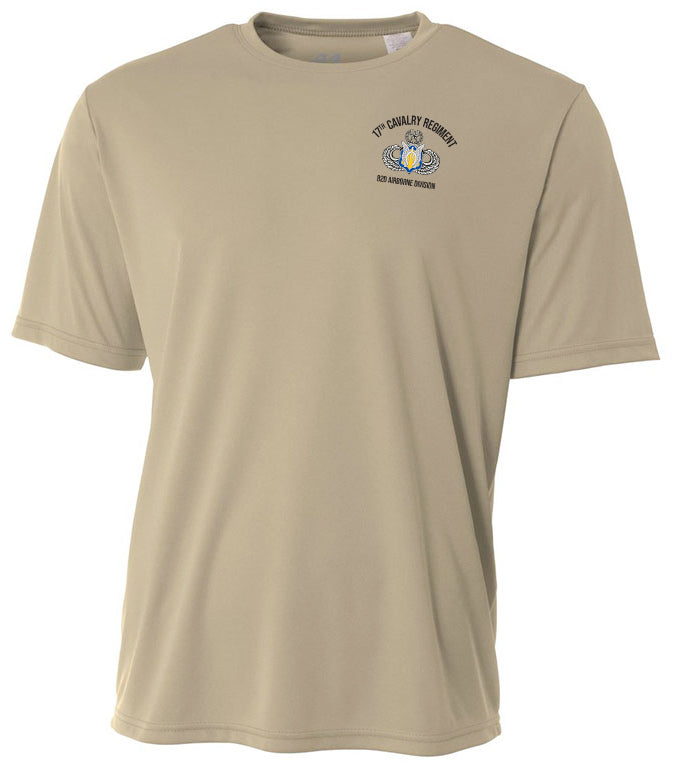

The 1st Squadron, 17th Cavalry Regiment connected the cavalry's mounted origins with the reconnaissance and aviation history of the 82nd Airborne Division. Its record includes reorganizations and periods of inactivity, not an uninterrupted century under one organization.
Troop A and the Reconnaissance Company
The squadron's lineage begins with Troop A, 17th Cavalry, constituted on July 1, 1916, and organized on July 9 at Fort Bliss, Texas. The troop was inactivated in 1921 and later disbanded.
In 1957, it was reconstituted and consolidated with the active 82nd Airborne Reconnaissance Company. The resulting organization became Troop A, 17th Cavalry, within the 82nd. On May 25, 1964, it was reorganized as the headquarters of 1st Squadron, 17th Cavalry.
Air Cavalry Service
The squadron's later history formed part of the division's aviation mission. The formal lineage record assigns it to the 82nd Combat Aviation Brigade in June 2006, providing a specific organizational milestone rather than treating all earlier cavalry service as the same air cavalry formation.
The brigade's account of the squadron's later deployments identifies Task Force Saber in the 2020 Immediate Response Force mission and Task Force Nighthawk supporting Operation Inherent Resolve in 2023.
The 2025 Inactivation Ceremony
The 82nd Combat Aviation Brigade documented the squadron's inactivation ceremony on December 15, 2025. Casing the colors marked the end of that active chapter, not the erasure of the unit's lineage or the service of its veterans.
AAC's collection honors the cavalrymen, aircrews, maintainers, and supporting Soldiers associated with 1-17. Its history is preserved through their service and the formal records of the organizations from which the squadron developed.
Historical Sources
- 1st Squadron, 17th Cavalry Regiment — Lineage and Honors. U.S. Army Center of Military History. Troop A origins, the 1957 consolidation, 1964 squadron organization, and 2006 aviation-brigade assignment.
- 1-17 Air Cavalry Squadron Inactivation Ceremony. 82nd Combat Aviation Brigade / DVIDS, December 15, 2025. Ceremony date and the brigade’s account of the 2020 and 2023 task-force deployments. Caption read; the full video was not transcribed.
Airborne Apparel Company is proud to offer reproductions and original designs honoring this military heritage and the people who served.