
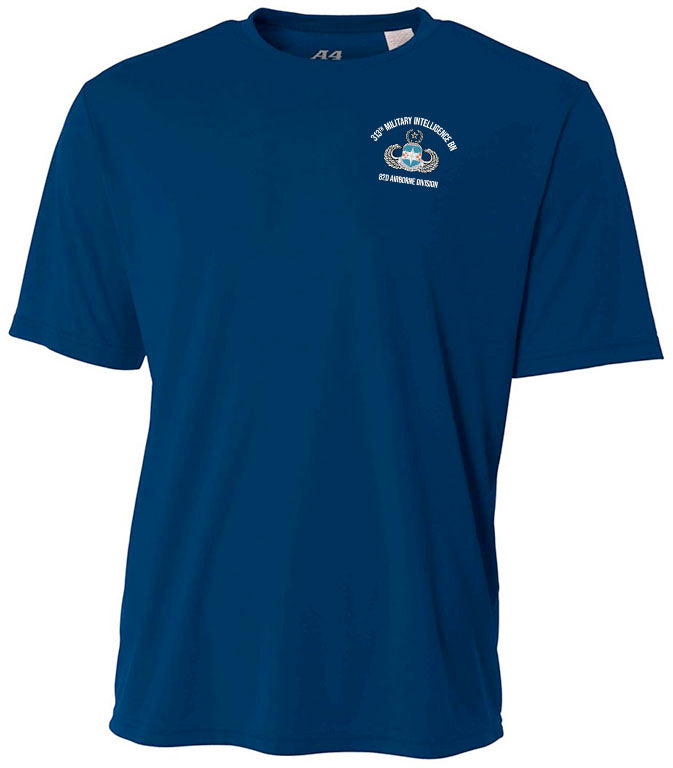

History and Doctrinal Analysis of the 313th Military Intelligence Battalion
Introduction and Doctrinal Context
The 313th Military Intelligence Battalion, officially designated as the "Crimson Dragons" and colloquially revered as the "Snow Owls," represents a foundational pillar in the historical architecture of United States Army tactical intelligence.1 For decades, the battalion served as the dedicated, organic divisional intelligence asset for the 82nd Airborne Division, merging the quiet, highly analytical professionalism of the Military Intelligence Corps with the aggressive, expeditionary, and physically demanding culture of airborne paratroopers.3 Operating under the motto "Savoir C'est Pouvoir" (Knowledge is Power), the 313th Military Intelligence Battalion served as the indispensable "knowledge wing" of the Army's premier rapid deployment force, providing critical situational awareness from the jungles of Southeast Asia to the deserts of the Middle East.1
The operational history of the 313th Military Intelligence Battalion offers a profound and exhaustive case study in the doctrinal evolution of tactical military intelligence. Historically, the United States Army struggled with the inherent tension between strategic intelligence gathering—often controlled by national agencies and characterized by delayed dissemination—and the immediate, kinetic, and highly localized intelligence requirements of the tactical maneuver commander on the front lines.4 Prior to the latter half of the twentieth century, intelligence elements were severely fragmented across disparate disciplines. Signals intelligence, human intelligence, and counterintelligence were sequestered in siloed detachments, a structural deficiency that frequently resulted in actionable information reaching frontline commanders far too late to influence dynamic combat operations.5
The evolution of the 313th Military Intelligence Battalion, particularly its transformation into a Combat Electronic Warfare and Intelligence (CEWI) battalion during the height of the Cold War, represented a revolutionary doctrinal paradigm shift.6 By unifying these historically disparate intelligence disciplines under a single, airborne-capable command structure, the battalion was engineered to provide the 82nd Airborne Division commander with a comprehensive, multi-spectral, and real-time picture of the battlespace.3 This exhaustive report provides a granular analysis of the 313th Military Intelligence Battalion. It traces the unit's complex lineage from its genesis as a signal depot in World War II to its critical role in modern asymmetric conflicts, details the structural mechanisms and tactical implementation of the CEWI doctrine, evaluates the battalion's highly specialized electronic warfare equipment, and assesses the unit's enduring historical significance following its inactivation and the transition to modular brigade combat teams in 2006.1
The Macro-Historical Context of Army Intelligence
To fully comprehend the significance of the 313th Military Intelligence Battalion, one must first examine the broader historical context of intelligence within the United States Army. Intelligence has long been defined as the art of "knowing one's enemies," making military intelligence as old as warfare itself.4 However, the institutional development of a dedicated, professional intelligence organization within the U.S. Army was remarkably slow and comparatively recent. The Army did not acquire a permanent peacetime intelligence organization until 1885, and for decades thereafter, intelligence functions remained ad hoc and heavily reliant on the Signal Corps and provisional detachments.4
It was not until 1962 that the Army formally recognized intelligence as a distinct professional discipline by creating the Army Intelligence and Security Branch, which served as the predecessor to today's Military Intelligence Branch.4 Furthermore, the Military Intelligence Corps, which finally incorporated all military intelligence personnel and units into a single, cohesive regiment, did not come into existence until 1987.4 The lineage of the 313th Military Intelligence Battalion perfectly mirrors this macro-historical progression. The unit began as a logistical communications element within the Signal Corps during World War II, transitioned into the highly classified realm of the Army Security Agency during the early Cold War, and finally matured into a comprehensive, multi-discipline Combat Electronic Warfare and Intelligence battalion, directly reflecting the Army's evolving understanding of information as a weapon system.7
Genesis and World War II Lineage
The organizational roots of the 313th Military Intelligence Battalion predate the formal establishment of the Military Intelligence Corps, tracing its origins directly to the logistical and communications infrastructure of World War II. The battalion's primary lineage derives from the 215th Signal Depot Company.1 Constituted on May 11, 1942, within the Army of the United States, the 215th Signal Depot Company was officially activated on September 25, 1942, at Camp Livingston, Louisiana.8 During this era, communications security, cryptographic distribution, and signal intelligence fell under the strict purview of the Signal Corps, while the operational security of the force was managed by independent counterintelligence personnel.4
Throughout the Second World War, the 215th Signal Depot Company and its associated elements provided critical communications and logistical support across the European theater of operations. The broader intelligence elements that would later be consolidated into the lineage of the 313th supported the 82nd Airborne Division's expansive campaigns across North Africa, Sicily, Italy, and mainland Europe.6 The 215th Signal Depot Company actively participated in some of the most grueling combat operations of the war, earning campaign participation credit for the Normandy invasion, Northern France, the Battle of the Bulge (Ardennes-Alsace), the Rhineland, and the Central Europe campaigns.1
The bravery, technical proficiency, and operational effectiveness of these early communications and intelligence detachments were widely recognized by allied nations. Detachments of the 215th Signal Depot Company were awarded the French Croix de Guerre with Palm, bearing the streamer embroidered "NORMANDY BEACHES".2 Concurrently, elements that would later form Company B of the modern battalion were highly decorated by the Belgian and Dutch governments. These units earned the Belgian Fourragere for actions in the Ardennes and operations in Belgium and Germany, as well as the Military Order of William (Degree of the Knight of the Fourth Class) and the Netherlands Orange Lanyard for their critical support during the airborne assault on Nijmegen during Operation Market Garden in 1944.1
Simultaneously, the 82nd Counterintelligence Corps Detachment—which was activated in England on August 20, 1944, using personnel from a provisional detachment attached to the 82nd Airborne Division—provided specialized operational security and counter-espionage support to the division during these massive airborne operations.1 Following the total capitulation of the Axis powers and the cessation of hostilities, the Army initiated a massive demobilization. Consequently, the 215th Signal Depot Company was inactivated on November 18, 1945, at Camp Kilmer, New Jersey, concluding its World War II service.8
The Cold War Pivot and the Army Security Agency Era
As the geopolitical landscape rapidly shifted from the alliance of World War II into the deeply polarized tensions of the Cold War, the United States Army recognized the absolute necessity of maintaining a permanent, highly trained signals intelligence and communications security force. The proliferation of radio communications and the looming threat of the Warsaw Pact necessitated a fundamental restructuring of Army signal assets.
Reorganization and Activation at Fort Bragg
On April 21, 1955, the inactive 215th Signal Depot Company was formally converted and redesignated as Headquarters and Headquarters Company, 313th Communication Reconnaissance Battalion, and allotted to the Regular Army.2 The newly formed battalion was activated a month later on May 16, 1955, at Fort Bragg, NC.8 During this critical reorganization, two existing units—the 358th Communication Reconnaissance Company and the 337th Communication Reconnaissance Company—were concurrently reorganized and redesignated to form Companies A and B of the new battalion structure.8 This shift from a "Signal Depot" to "Communication Reconnaissance" marked the unit's definitive transition from basic signal supply and logistics to the highly classified realm of signals interception and electronic surveillance.
This transition was fully codified just over a year later. On July 1, 1956, the unit was officially redesignated as the 313th Army Security Agency (ASA) Battalion.2 The Army Security Agency was the Army's premier signals intelligence branch, operating under the strict operational and cryptographic control of the National Security Agency (NSA). The ASA was responsible for monitoring Soviet and allied communications, developing cryptographic codes, and conducting electronic warfare. Although the 313th ASA Battalion was briefly inactivated on December 18, 1957, the escalating tensions of the Cold War and the looming, complex conflict in Southeast Asia necessitated its rapid reactivation on May 25, 1962, at Fort Bragg, NC.8
Operations in the Vietnam War
The conflict in Vietnam forced a radical paradigm shift in how the United States Army employed signals intelligence. Historically, the Army Security Agency operated from massive, static listening posts located in allied nations to monitor long-haul Soviet communications. In the dense, restrictive, and highly asymmetric jungles of Vietnam, however, the enemy was exceptionally mobile, decentralized, and utilized low-power, localized radio networks to coordinate guerrilla attacks. The static listening post model was entirely insufficient for this environment. The 313th ASA Battalion and its subordinate companies were deployed to Southeast Asia to meet this challenge, adapting their operations to provide tactical, highly localized, and immediate intelligence to maneuver commanders in the field.1
Operating in a clandestine capacity, elements of the battalion deployed under various cover designations to mask their highly classified capabilities from the enemy. For example, Company B of the 313th ASA Battalion operated under the cover designation of the 11th Radio Research Unit (RRU).10 The deployment of these units to the combat zone was fraught with extreme logistical hurdles. Upon arriving in-country, commanders often found that their highly specialized interception equipment was delayed at the port. Early deployments required unit officers to borrow standard cargo trucks from allied infantry divisions simply to reach the docks in Saigon and physically offload their own specialized intelligence gear to begin their mission.10
Despite these severe initial logistical constraints, the 313th ASA Battalion and its subordinate companies excelled in the art of tactical signals intelligence. By utilizing vehicle-mounted and man-portable radio direction-finding equipment, the battalion intercepted Viet Cong and North Vietnamese Army (NVA) communications. This tactical SIGINT allowed U.S. forces to preempt complex ambushes, locate hidden enemy base camps in the dense jungle canopy, and direct devastating artillery and close air support strikes onto enemy staging areas. Elements of the 313th, such as the 337th ASA Company (formerly B Company), deployed in direct support of the 1st Infantry Division in the highly contested I Corps Tactical Zone, operating under the broader control of the 303rd ASA Battalion.1
The battalion's personnel endured immense hardships and constant threat of attack, remaining in-country until July 1971. The unit's extensive combat service resulted in the awarding of twelve campaign streamers, encompassing major operations such as the Tet Counteroffensive, the Sanctuary Counteroffensive, and the Summer-Fall 1969 campaigns.1 The immense operational contributions of the 313th ASA Battalion to the overall war effort were formally recognized by both the United States and the Republic of Vietnam. The unit earned five Meritorious Unit Commendations, the Republic of Vietnam Cross of Gallantry with Palm, and the Republic of Vietnam Civil Action Honor Medal, First Class.1
The operational experience gained in the jungles of Vietnam provided a crucial, second-order insight for the Army's intelligence community: military intelligence could no longer afford to be a rigid, top-down enterprise strictly controlled by national agencies. Tactical maneuver commanders required their own organic, highly flexible intelligence units capable of moving seamlessly with infantry and armor elements, processing data locally, and acting immediately. This fundamental realization laid the conceptual groundwork for the most significant doctrinal restructuring of Army intelligence in the 20th century.
The CEWI Revolution and Doctrinal Restructuring
In the post-Vietnam era, the United States Army undertook a massive, comprehensive doctrinal review to prepare for the possibility of high-intensity, mechanized conflict against the Warsaw Pact in Europe, as well as the need for rapid contingency operations globally. A pivotal 1975 Intelligence Organization and Stationing Study concluded that the traditional method of attaching separate, discipline-specific intelligence units—such as independent ASA signals companies or separate counterintelligence detachments—to combat divisions was dangerously inefficient and tactically unsound.5 This fragmented approach created a system where analysts were completely siloed;SIGINT analysts rarely communicated with HUMINT interrogators, resulting in a fractured intelligence picture that took too long to compile and disseminate to the commander.5
To solve this critical operational deficiency, the Army developed the Combat Electronic Warfare and Intelligence (CEWI) concept.5 The CEWI doctrine mandated that all disparate intelligence disciplines be brought together, physically and organizationally, under a single, unified battalion command structure organically assigned to the combat division.
On October 16, 1979, the 313th Army Security Agency Battalion was formally reorganized and redesignated as Headquarters and Headquarters Company, 313th Military Intelligence Battalion (CEWI), and permanently assigned as the organic divisional intelligence unit for the 82nd Airborne Division at Fort Bragg, NC.3 This transition transformed the 313th from a purely signals-focused unit into a comprehensive, multi-domain intelligence organization. The battalion now housed signals intelligence (SIGINT), electronic warfare (EW), human intelligence (HUMINT), counterintelligence (CI), and long-range surveillance (LRS) capabilities under a single airborne commander.7
This centralization created a powerful, self-contained analytical engine capable of processing multi-discipline intelligence rapidly. Instead of raw SIGINT being transmitted back to the National Security Agency and raw HUMINT being sent to the Defense Intelligence Agency before eventually trickling down to the division days later, the 313th Military Intelligence Battalion fused this data internally at the tactical edge. This allowed the battalion to provide the 82nd Airborne Division's command staff with actionable targeting data and threat warnings in near real-time.5
Structural Anatomy of the 313th MI Battalion
To execute this highly complex, multidomain mission, the 313th Military Intelligence Battalion was structured into highly specialized companies. Each company provided a distinct, specialized pillar of the overall intelligence architecture, allowing the battalion commander to orchestrate a symphony of collection assets across the battlefield.1
|
Unit Designation |
Primary Intelligence Disciplines |
Core Tactical Function within the Division |
|
Headquarters & Headquarters Company (HHC) |
Collection Management, All-Source Intelligence Analysis |
Provided command and control, logistical support, and operated the Technical Control and Analysis Element (TCAE), which synchronized and directed all subordinate collection assets and fused the incoming data.1 |
|
Company A |
Signals Intelligence (SIGINT), Voice Intercept, Communications |
Conducted communications interception, deep traffic analysis, and generated line-of-bearing (LOB) data to precisely locate enemy radio transmitters and command nodes.1 |
|
Company B |
Electronic Warfare (EW), Electronic Attack |
Operated heavy, ground-based jamming systems to disrupt, deceive, and completely neutralize enemy command, control, and communications (C3) infrastructure.1 |
|
Company C |
Human Intelligence (HUMINT), Counterintelligence (CI) |
Conducted rigorous prisoner of war interrogations, exploited captured enemy documents, performed debriefings, and neutralized enemy espionage and sabotage operations within the division's rear area.1 |
|
Long Range Surveillance Detachment (LRSD) |
Deep Reconnaissance, Remote Battlefield Surveillance |
Inserted highly trained six-man teams deep behind enemy lines via airborne drop to provide visual confirmation of high-value targets and continuous battlefield surveillance without detection.1 |
The Long Range Surveillance Detachment (LRSD) represented a particularly elite and critical capability for the airborne division. While national technical means, such as low-earth orbit satellites, could provide strategic imagery of the battlefield, the division commander frequently required organic "eyes on the ground" capable of surviving deep in hostile territory. The LRSD fulfilled this role perfectly. These teams operated far beyond the forward line of own troops (FLOT), remaining undetected without immediate resupply or continuous, high-bandwidth communications.18 They bridged the crucial tactical gap between strategic special operations reconnaissance and conventional divisional cavalry screens.
Furthermore, the 313th Military Intelligence Battalion exercised operational control (OPCON) over specific combat aviation assets, most notably the "Quickfix" flight platoon.12 The Quickfix system (AN/ALQ-151) utilized heavily modified utility helicopters to provide aerial SIGINT collection and airborne electronic jamming. By elevating their antennas thousands of feet into the air, the Quickfix helicopters bypassed terrain restrictions, projecting the 313th's electronic reach far beyond the horizon and deep into the enemy's operational depth.12
Heraldry, Identity, and the "Crimson Dragons"
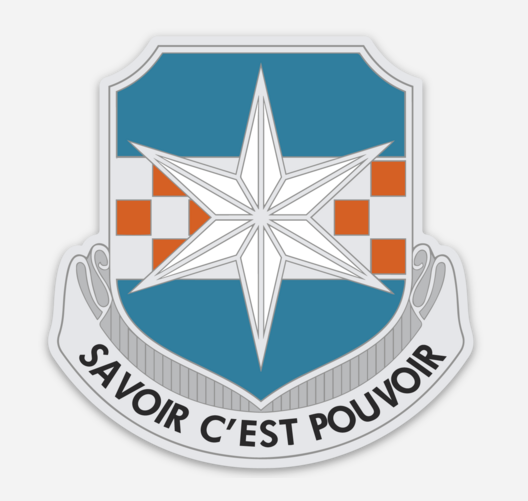
The unit's visual identity and official heraldry perfectly encapsulate its complex organizational history and transition to the CEWI doctrine. The battalion's Coat of Arms features a teal blue (azure) shield with a checkered band of silver (argent) and orange (tenné), overlaid with a prominent six-pointed star.2 The teal blue and silver gray represent the Military Intelligence branch to which the unit was ultimately assigned, while the prominent orange and white colors pay direct homage to the unit's historical origins within the Signal Corps.2 The six points of the mullet (star) signify the battalion's major decorations earned during the brutal combat of World War II and the Vietnam War.2
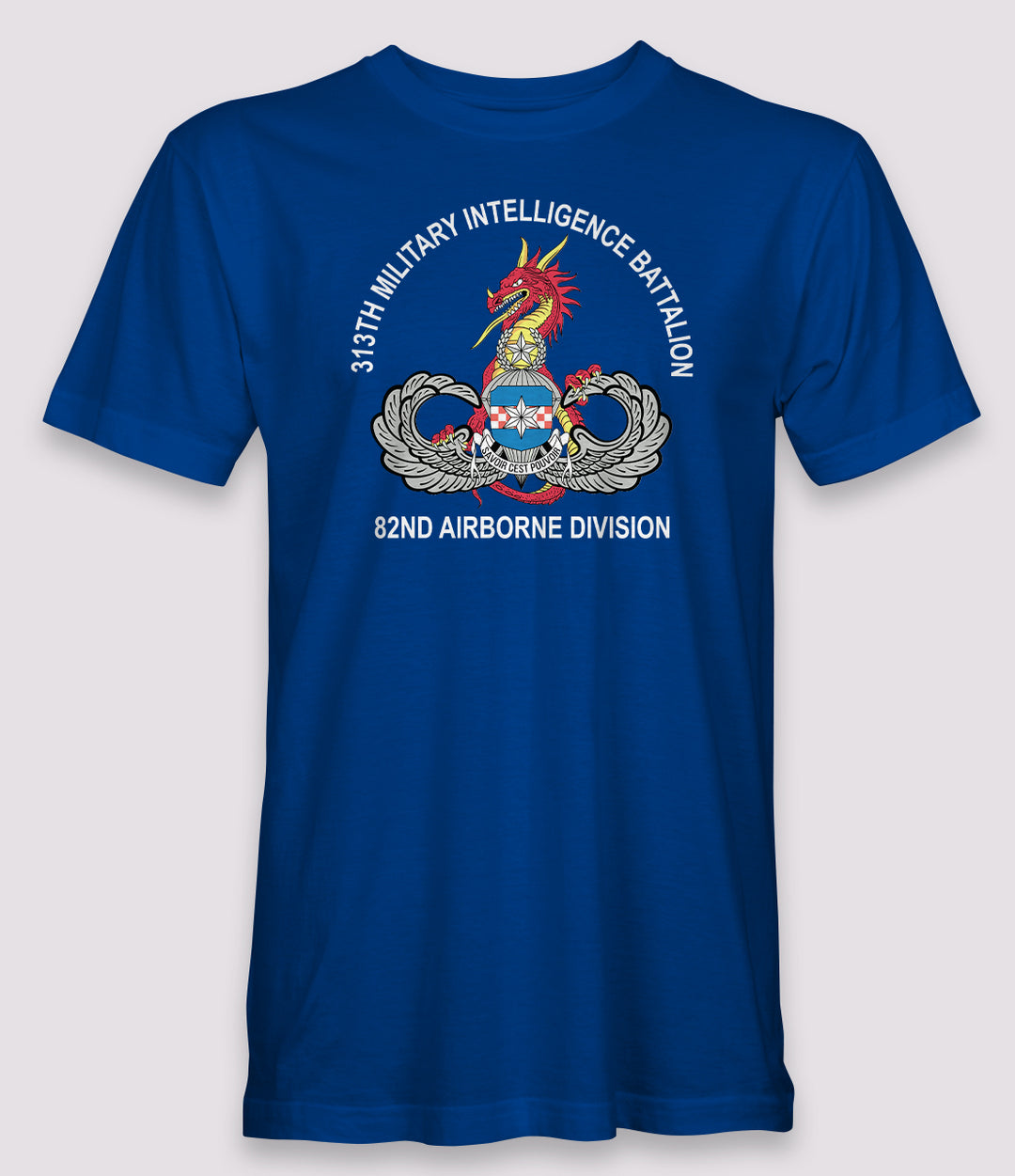
The crest of the Coat of Arms features a red (gules) "dragon passant" positioned in front of a green mount impaled with twelve bamboo spikes.2 The crimson dragon symbolizes the unit's constant vigilance, alertness, and readiness to deploy globally. Its distinct Asian styling denotes the battalion's extensive and highly decorated service as an Army Security Agency unit in Vietnam.1 The green mountain represents the lush, restrictive terrain of Southeast Asia, and the twelve bamboo spikes explicitly honor the twelve specific campaign phases the battalion participated in during the Vietnam War.1 Together, these symbols forged a unique identity of elite, highly decorated intelligence professionals, leading to the adoption of the official nickname "Crimson Dragons," alongside the informal moniker "Snow Owls".1
Airborne Electronic Warfare: Systems and Tactical Implementation
A defining characteristic that set the 313th Military Intelligence Battalion apart from standard mechanized or infantry division intelligence units was its absolute requirement to operate highly sensitive, heavy electronic equipment while remaining a rapidly deployable airborne force. The implementation of sophisticated, ground-based signals intelligence and electronic warfare systems required unique, often extreme logistical and tactical innovations.
Interception and Direction Finding: AN/TRQ-32 TEAMMATE
The AN/TRQ-32(V), widely known across the intelligence community as "TEAMMATE," served as the absolute backbone of the battalion's tactical SIGINT capability throughout the late Cold War and into the 1990s.12 It was a highly mobile, ground-based communications intercept and direction-finding (DF) system.21 Initially mounted on a 5/4-ton 4x4 Commercial Utility Cargo Vehicle (CUCV) and later transitioned to the High Mobility Multipurpose Wheeled Vehicle (HMMWV), TEAMMATE provided comprehensive high-frequency (HF), very-high-frequency (VHF), and ultra-high-frequency (UHF) intercept capabilities out to a staggering range of 30 kilometers.12
The system's most notable physical feature was its quick-erect pneumatic/hydraulic 25-foot antenna mast.12 When multiple TEAMMATE systems were geographically dispersed across the battlefield and netted together, they possessed the capability to rapidly triangulate enemy radio emissions. By generating precise, intersecting Lines of Bearing (LOB), the 313th's analysts located within the TCAE could fix the exact grid coordinates of enemy command posts, logistics nodes, or artillery batteries. This targeting data was then passed directly to the division's fire support elements or close air support for immediate, devastating kinetic destruction.13
Electronic Attack: AN/MLQ-34 TACJAM
While the TEAMMATE system acted as the highly sensitive ears of the battalion, the AN/MLQ-34, known as "TACJAM," acted as its electronic fist.12 TACJAM was the most powerful and highly mobile ground-based communications jamming system in the Army's tactical inventory.12 Enclosed in a ruggedized S-595 shelter, this semi-automatic, computer-assisted VHF jammer was capable of simultaneously targeting and jamming up to three distinct enemy high-payoff target (HPT) communications facilities at once.12 By deliberately cutting off the enemy's ability to communicate, TACJAM isolated enemy maneuver units on the battlefield, completely preventing them from coordinating counterattacks, calling for artillery support, or reporting their situation to higher headquarters.12
The Mechanics of Airborne Heavy Drop Implementation
The implementation of these massive electronic systems within the 82nd Airborne Division presented extreme engineering, logistical, and operational challenges. A standard heavy mechanized division could simply drive these tracked or wheeled systems into position over land. The 313th Military Intelligence Battalion, however, was required by doctrine to project these systems globally within eighteen hours, deploying them via parachute from C-141 Starlifter and C-130 Hercules transport aircraft directly alongside the initial infantry assault waves.23
Executing a "heavy drop" of delicate computer servers, highly classified cryptographic equipment, and hydraulic antenna masts required meticulous, specialized rigging procedures.24 The TEAMMATE and TACJAM vehicles were mounted onto massive energy-absorbing honeycomb cardboard platforms and heavy wooden pallets. During the airborne assault, these platforms were extracted from the rear of the aircraft mid-flight by deployment parachutes, followed by the deployment of massive cargo parachutes that lowered the multi-ton vehicles to the earth.
Upon landing on a violently contested drop zone, the paratroopers of the 313th had to quickly locate their specific equipment bundles under the cover of darkness and enemy fire, rapidly de-rig the platforms, start the vehicles, power up the internal generators, erect the 25-foot masts, and immediately begin intercepting enemy communications. This allowed the intelligence analysts to provide the assault force commander with immediate situational awareness regarding enemy counterattack forces. The successful implementation of these procedures in combat validated the Army's ambitious theory that heavy electronic warfare capabilities could be effectively projected and utilized by light airborne forces.
Operation Urgent Fury: The Grenada Intervention
The newly integrated CEWI doctrine, and the 313th Military Intelligence Battalion's ability to execute it, faced its first major operational combat test during Operation Urgent Fury in October 1983.26 Triggered by a violent communist coup within the Caribbean island nation of Grenada, the United States launched a massive joint military operation to restore political order, depose the Revolutionary Military Council, and rescue hundreds of American medical students trapped on the island.26
The 313th Military Intelligence Battalion deployed rapidly in direct support of the 82nd Airborne Division's combat parachute assault.3 The initial insertion into Grenada was extraordinarily perilous; paratroopers executed what is considered the lowest mass tactical combat jump in modern military history—exiting the aircraft at roughly 500 feet above ground level—to minimize their exposure in the air to formidable Cuban and Grenadian anti-aircraft fire.23
During the intense eight-day operation, the 313th provided critical tactical intelligence that shaped the battlefield.27 By aggressively intercepting enemy radio communications, the battalion's SIGINT elements helped maneuver commanders locate entrenched Cuban troop concentrations and pinpoint the positions of heavy weapon systems, such as the deadly Soviet-made ZU-23-2 anti-aircraft guns that threatened U.S. aviation assets.27
Furthermore, Operation Urgent Fury highlighted the absolute necessity of comprehensive, integrated HUMINT operations on the modern battlefield. As U.S. forces rapidly overwhelmed the island's defenders, the volume of captured combatants swelled enormously. The 313th Military Intelligence Battalion's interrogators from Company C were immediately tasked with processing, interrogating, and classifying hundreds of Cuban prisoners of war.17 This critical function generated immediate, actionable intelligence regarding enemy holdout positions, the location of hidden arms caches, and the political structure of the remaining resistance forces.30 The operational successes, as well as the friction points encountered during Grenada, directly informed the refinement of the battalion's training regimen leading into its next major conflict.
Operation Just Cause: Validating the Doctrine in Panama
If Grenada served as the initial testing ground for the CEWI concept, Operation Just Cause in Panama served as the ultimate, undeniable validation of the 313th Military Intelligence Battalion's combat capabilities. In late December 1989, President George H.W. Bush ordered the invasion of Panama to safeguard U.S. lives, defend the democratic process, protect the integrity of the Panama Canal treaties, and apprehend the indicted narco-dictator General Manuel Noriega.25
Intelligence Preparation of the Battlefield
From a tactical intelligence planning standpoint, the conditions prior to Operation Just Cause were highly advantageous, representing a textbook application of Intelligence Preparation of the Battlefield (IPB). The 470th Military Intelligence Brigade, permanently stationed in Panama, had spent years meticulously monitoring the movements, communications, and organizational structure of Noriega's Panama Defense Forces (PDF) and his violent paramilitary enforcers known as the "Dignity Battalions".24
The 313th Military Intelligence Battalion, preparing for deployment at Fort Bragg, integrated seamlessly into this pre-established, robust intelligence architecture. Planners utilized detailed SIGINT and HUMINT provided by theater assets to map the exact locations of PDF barracks, critical command and control nodes, and high-value political targets.34 However, this intelligence also provided dire warnings of Noriega's contingency plans—code-named GENESIS and EXODUS—which explicitly called for mass hostage-taking of American civilians and a protracted guerrilla warfare campaign in the jungle interior if a U.S. invasion occurred.24 This intelligence dictated that the airborne assault must be overwhelming and simultaneously target all PDF command nodes to prevent an organized retreat.
The Combat Jump and Early Friction
The physical deployment of the 313th Military Intelligence Battalion was fraught with severe environmental and logistical friction. An intense, unseasonal ice storm struck Fort Bragg and Pope Air Force Base on the night of December 19, 1989, completely freezing the runway and severely delaying the takeoff of the C-141 Starlifters carrying the 82nd Airborne's Division Ready Brigade.24 Consequently, the paratroopers were forced to execute a staggered, disjointed combat jump onto the Torrijos-Tocumen international airport complex in the early, dark hours of December 20.23 Due to the threat of enemy fire, the jump was conducted at a dangerously low altitude of 500 feet, allowing the paratroopers only seconds to check their canopies before violently striking the tarmac.23
Paratroopers of the 313th, heavily laden with combat gear, radios, and individual weapons, jumped directly into a chaotic firefight to secure the airport runways and terminals.3 Concurrent with the personnel drop, the Air Force successfully executed the heavy drop of the 82nd's vehicles, including the critical intelligence collection platforms. The 313th's paratroopers immediately sought out their heavy gear upon landing. The inherent chaos of a nighttime combat drop zone, combined with heavy drop platforms landing off-target in the swampy margins of the airfield, required the intelligence soldiers to violently improvise. Recognizing that their specialized equipment needed to be moved to operational sectors immediately, paratroopers resorted to hot-wiring civilian vehicles abandoned at the airport to transport highly sensitive cryptographic equipment and personnel to their required positions.25
Operational Success and the SIGINT-to-HUMINT Transition
Once operational and properly positioned, the 313th Military Intelligence Battalion delivered continuous, suffocating battlefield surveillance and electronic warfare against the disorganized PDF.3 Their intelligence collection proved absolutely vital in neutralizing the scattered remnants of the Panamanian military forces and suppressing the vicious Dignity Battalions that roamed the streets of Panama City.35 The battalion's SIGINT elements monitored PDF frequencies, directing Ranger and Airborne infantry units to intercept fleeing Panamanian commanders, ultimately contributing to the environment that forced General Noriega to surrender to U.S. forces in early January 1990.32
A critical, third-order insight derived from Operation Just Cause was the vulnerability and inflexibility of highly specialized Military Occupational Specialties (MOS) during mass capitulation events in urban environments. The rapid, total collapse of the PDF resulted in thousands of enemy detainees flooding U.S. holding areas. At the time, Military Intelligence units, including the 313th, maintained a significantly higher ratio of SIGINT operators and electronic warfare specialists to HUMINT interrogators.34 The overwhelming, unexpected number of prisoners necessitated that SIGINT voice interceptors from Company C and other attached units abruptly transition into HUMINT roles.16
These electronic specialists were forced to process detainees, conduct hasty field interrogations, and manage prisoner holding areas—tasks for which they were not specifically doctrinally trained.16 This massive functional crossover underscored a growing realization within the Army Intelligence community: expeditionary intelligence units required significantly greater cross-training. To adapt to the unpredictable demands of urban warfare, stabilization operations, and mass capitulation, future intelligence soldiers would need to be versatile operators capable of bridging the gap between technical surveillance and human exploitation.16
Operations Desert Shield and Desert Storm: The 100-Hour War
In August 1990, Iraqi dictator Saddam Hussein launched a massive armored invasion of neighboring Kuwait, prompting an immediate, unprecedented response from the United States and a vast multinational coalition.39 Operation Desert Shield marked the massive, rapid logistical buildup of coalition forces in Saudi Arabia, which transitioned into the devastating offensive of Operation Desert Storm in early 1991.40 The 313th Military Intelligence Battalion deployed rapidly as the primary divisional intelligence asset for the 82nd Airborne Division, tasked with providing vital intelligence collection, electronic warfare, and analysis in the harsh, unforgiving desert environment of the Middle East.3
Intelligence Friction Prior to G-Day
The lengthy buildup to the ground invasion—commonly referred to as G-Day—highlighted a significant limitation in tactical intelligence doctrine when operating in a heavily restricted political environment. Because U.S. and coalition forces maintained a strictly defensive posture behind the Saudi Arabian border during the months of Operation Desert Shield, division-level intelligence assets, including the 313th Military Intelligence Battalion, were largely restricted from utilizing their organic collection platforms to probe deeply into Iraqi territory.41
Without the political clearance to push ground sensors forward to collect vital combat information or establish deep lines of bearing, the Collection Management and Dissemination (CM&D) sections within the battalion missed crucial opportunities.41 They were unable to fully rehearse the incredibly complex task of managing intelligence flow across a heavy mechanized front prior to the commencement of hostilities, forcing analysts to rely heavily on national-level intelligence rather than their own organic tactical feeds.41 To bridge this gap, theater-level commands deployed advanced systems like the Electronic Processing Dissemination System (EPDS) under the Tactical Exploitation of National Capabilities (TENCAP) program, which allowed tactical units to receive correlated SIGINT data collected by national and theater sensors.42
The "Left Hook" and High-Tempo Operations
When the ground war finally commenced on February 24, 1991, the coalition executed the famous "Left Hook"—a massive, rapid, and logistically astonishing armored thrust through the western desert designed to completely outflank, envelop, and destroy the elite Iraqi Republican Guard.43 The overarching doctrine of the ground operation was driven by the principle that "speed is security"; moving faster than the enemy's decision cycle and repositioning capabilities was absolutely critical to coalition survival and success.43
For the 313th Military Intelligence Battalion, supporting this unprecedented rapid armored maneuver required near-superhuman endurance.6 Operating mobile collection systems like the AN/TRQ-32 TEAMMATE, the battalion bounded forward relentlessly. Intelligence teams constantly erected 25-foot antennas in the desert winds, collected critical SIGINT on Iraqi troop movements, tore down the heavy equipment, and moved forward again to keep pace with the division's rapid advance.21 The Iraqi forces were methodically dismantled and blind-sided, largely because coalition commanders possessed unparalleled, real-time situational awareness regarding enemy dispositions.40
However, the physical and psychological human cost of this high-tempo operation was severe. By the third day of the 100-hour ground war, the physiological limits of the battalion's analysts and operators had been severely breached. The standard watch rotations completely collapsed under the sheer momentum of the offensive; SIGINT collectors, interrogators, and radio operators remained at their stations continuously, many having not slept since the day prior to the invasion.43 The profound exhaustion experienced by the 313th's personnel forced a heavy reliance on caffeine, stimulants, and sheer airborne willpower to maintain the uninterrupted flow of critical intelligence required by the division command group.43
Validation of the Military Intelligence Corps
Despite the immense physical toll on the soldiers and the pre-invasion collection friction, the operational results of Desert Storm were historic and unequivocal. Brigadier General John F. Stewart, Jr., the G2 (senior intelligence officer) of the 3rd U.S. Army, famously declared in the aftermath of the conflict that "Military Intelligence came of age here in the desert".40
Operation Desert Storm marked the first time in military history that Military Intelligence units were deployed to provide direct, organic support to combat divisions with fully manned, heavily equipped, and doctrinally integrated intelligence battalions.40 The 313th Military Intelligence Battalion proved irrefutably that the CEWI concept—fusing SIGINT, Electronic Warfare, and HUMINT at the absolute tactical edge of the battlefield—was a decisive combat multiplier. The intelligence provided by battalions like the 313th directly contributed to the rapid destruction of the fourth-largest military in the world and the historically, unprecedentedly low number of coalition casualties.40
The Global War on Terror and Modular Transformation
Following the catastrophic September 11, 2001 terrorist attacks, the United States military pivoted to a fundamentally different type of warfare. The 313th Military Intelligence Battalion transitioned seamlessly into the Global War on Terror, deploying repeatedly in support of the 82nd Airborne Division's operations in Operation Enduring Freedom (OEF) in Afghanistan and Operation Iraqi Freedom (OIF) in Iraq.1
The nature of the counterinsurgency (COIN) battlefield was starkly different from the mechanized deserts of Iraq or the jungles of Vietnam. It was characterized by highly decentralized terrorist networks, the pervasive threat of improvised explosive devices (IEDs), and a complex, population-centric threat landscape. This environment demanded a vast increase in intelligence fidelity; commanders no longer needed to know where an enemy tank battalion was located, but rather the specific identity and social network of an insurgent bomb-maker hiding within a dense civilian population.
The companies of the 313th Military Intelligence Battalion distinguished themselves repeatedly in these asymmetric theaters. Company A earned the Valorous Unit Award for its critical intelligence actions in Afghanistan from January to August 2003, while Companies B and C received Valorous Unit Awards and Presidential Unit Citations for their exceptional intelligence support during the intense combat operations of the initial invasion and subsequent occupation of Iraq between 2003 and 2004.1 The battalion adapted to this new environment by aggressively utilizing new technologies, testing early iterations of networked tactical systems. By linking smartphone-like devices (Nett Warrior) with tactical software-defined radios, intelligence and targeting data could flow horizontally between dismounted squad leaders clearing houses, and vertically back to the battalion command post instantaneously, massively accelerating the kill chain against high-value targets.45
The Modular Restructuring and Inactivation
Despite the battalion's exemplary performance in Iraq and Afghanistan, the strategic realities of the protracted Global War on Terror prompted the Department of the Army to fundamentally rethink its overall organizational structure. The division-centric warfare model of the Cold War—where massive, centralized enabler battalions like the 313th MI were controlled strictly by a two-star general at the division headquarters—proved too cumbersome and slow for highly decentralized, fast-paced COIN operations.5 Brigade commanders out on isolated Forward Operating Bases (FOBs) required their own permanent, organic intelligence, logistical, and artillery support to operate independently, rather than waiting for the division to allocate these assets temporarily.
In the mid-2000s, the Army initiated a massive, force-wide modular transformation, completely restructuring its combat forces into self-sufficient, highly independent Brigade Combat Teams (BCTs).1 Under this new modular doctrine, the concept of a massive, centralized Divisional Military Intelligence Battalion was deemed obsolete. Consequently, in 2006, after decades of highly decorated service, the 313th Military Intelligence Battalion was officially inactivated and disbanded.1
The inactivation process, however, did not eliminate the 82nd Airborne Division's intelligence capability; rather, it distributed it directly to the warfighter. The 313th was methodically broken up, with the majority of its highly trained personnel, specialized vehicles, and cryptographic equipment reassigned to the newly created Military Intelligence Companies (MICOs) that were permanently embedded within the Brigade Support Battalions of each of the 82nd Airborne Division's Brigade Combat Teams.1 This ensured that every brigade commander possessed organic SIGINT and HUMINT capabilities at all times.
A notable exception to this distribution was the battalion's elite Long Range Surveillance Detachment (LRSD). As unmanned aerial vehicles (UAVs) and advanced satellite imagery increasingly assumed the deep reconnaissance mission, the tactical requirement for six-man deep-drop infantry surveillance teams diminished significantly. Consequently, the LRSD was reorganized, reflagged, and reassigned as Company F (Pathfinder), 2nd Battalion, 82nd Aviation Regiment.1 Here, they utilized their highly specialized airborne insertion and reconnaissance skills to establish helicopter landing zones, drop zones, and provide personnel recovery capabilities for the Combat Aviation Brigade.
Current Disposition and Enduring Legacy
As of the current operational era, the 313th Military Intelligence Battalion remains inactive, its organizational colors safely cased, and its physical disposition dissolved into the modular brigade combat teams.6 However, the legacy and tactical innovations forged by the "Crimson Dragons" continue to profoundly influence modern airborne operations.
The requirement for rapid, airborne-capable intelligence has only grown more acute in the era of Large-Scale Combat Operations (LSCO) and Great Power Competition. Today, the 82nd Airborne Division continues to push the boundaries of tactical intelligence, leveraging advanced artificial intelligence tools like the Maven Smart System to aggregate personnel, equipment, and logistical data, ensuring the division's Immediate Response Force (IRF) remains capable of global deployment within 18 hours.48 This mission is now supported by newly activated or realigned units, such as the 319th Intelligence and Electronic Warfare Battalion, which carry forward the CEWI philosophy into the digital age.48
The lineage and honors of the 313th Military Intelligence Battalion remain a foundational pillar of the United States Army's airborne intelligence heritage.6 From intercepting encrypted communications in the hedgerows of Normandy, to triangulating insurgent networks in the dense urban sprawl of Baghdad, the battalion consistently pushed the boundaries of tactical intelligence gathering.
The battalion's extensive operational history definitively validates the doctrinal shift toward pushing intelligence gathering and analysis down to the absolute lowest possible tactical echelon. By successfully merging disparate intelligence disciplines under the CEWI concept, and by mastering the incredibly complex, highly dangerous logistics required to parachute sensitive electronic warfare systems onto hostile drop zones, the 313th Military Intelligence Battalion provided the 82nd Airborne Division with an undeniable, historically proven operational advantage.3 Although the unit remains inactive, the intelligence frameworks, electronic warfare tactics, and sheer expeditionary mindset developed by the paratroopers of the 313th Military Intelligence Battalion continue to shape precisely how the United States Army fights, understands its adversaries, and wins on the modern multi-domain battlefield.6