


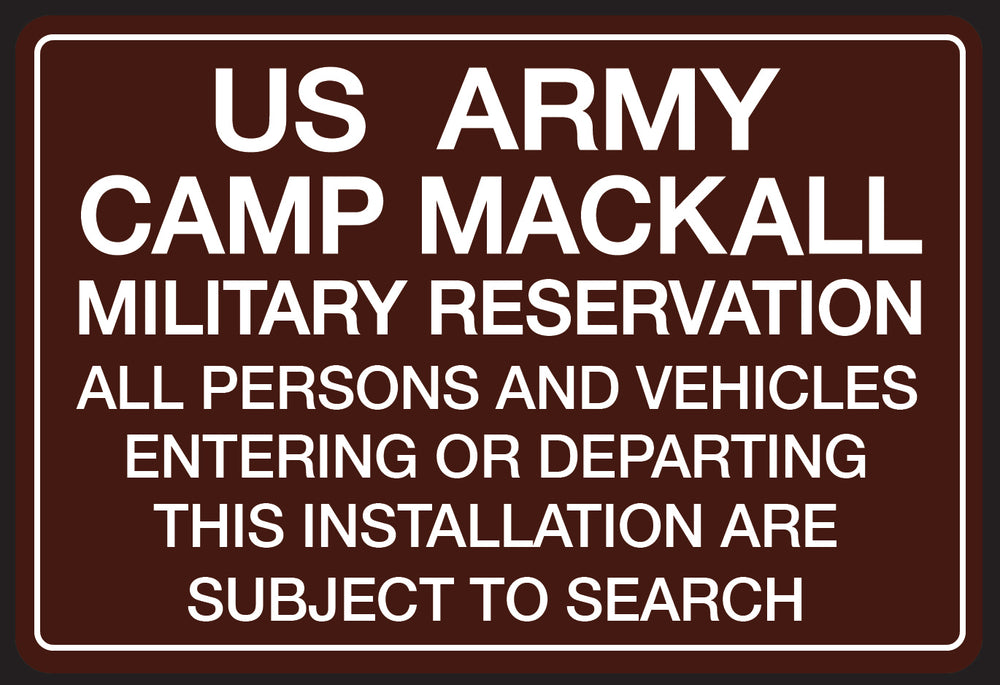

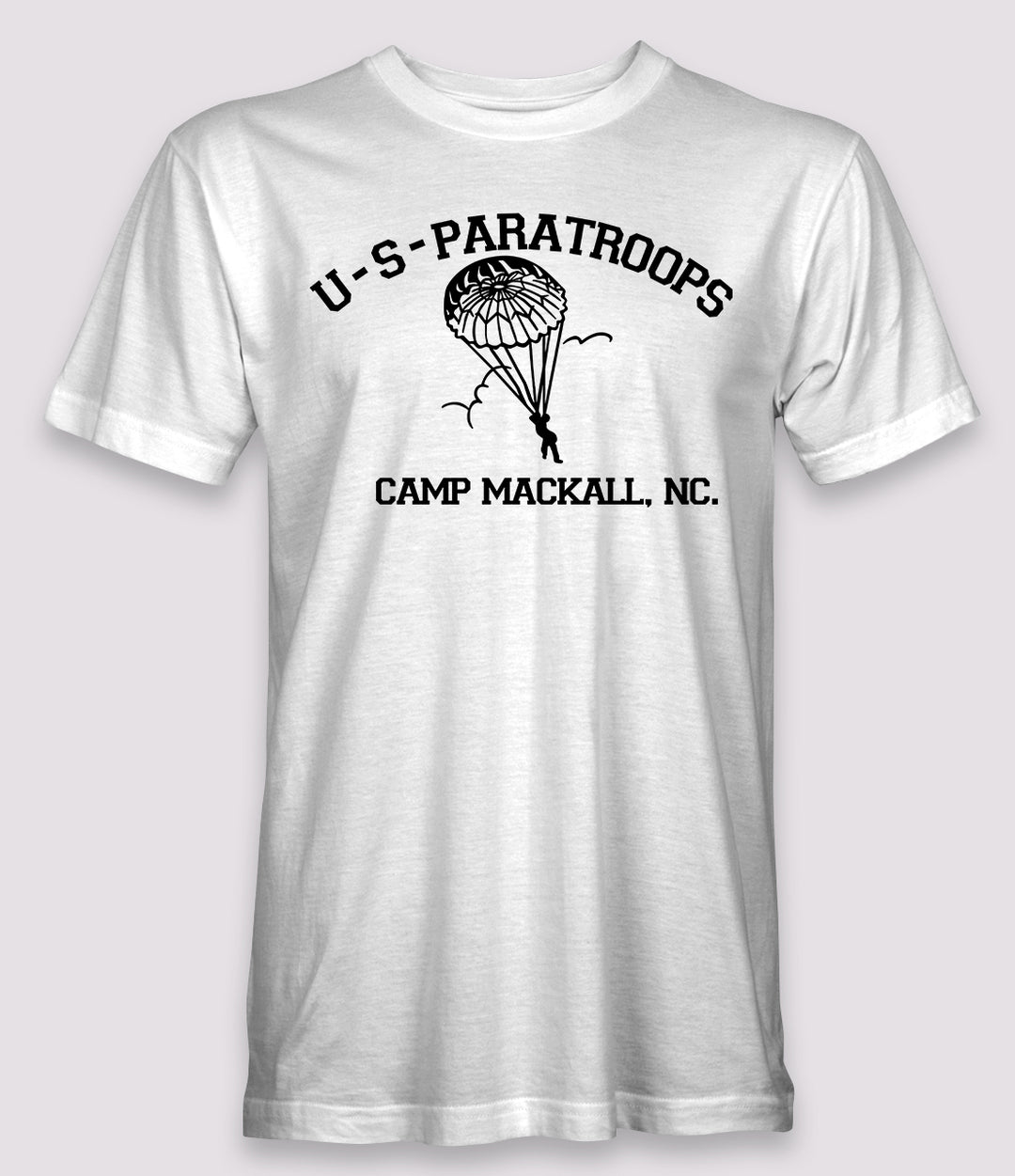
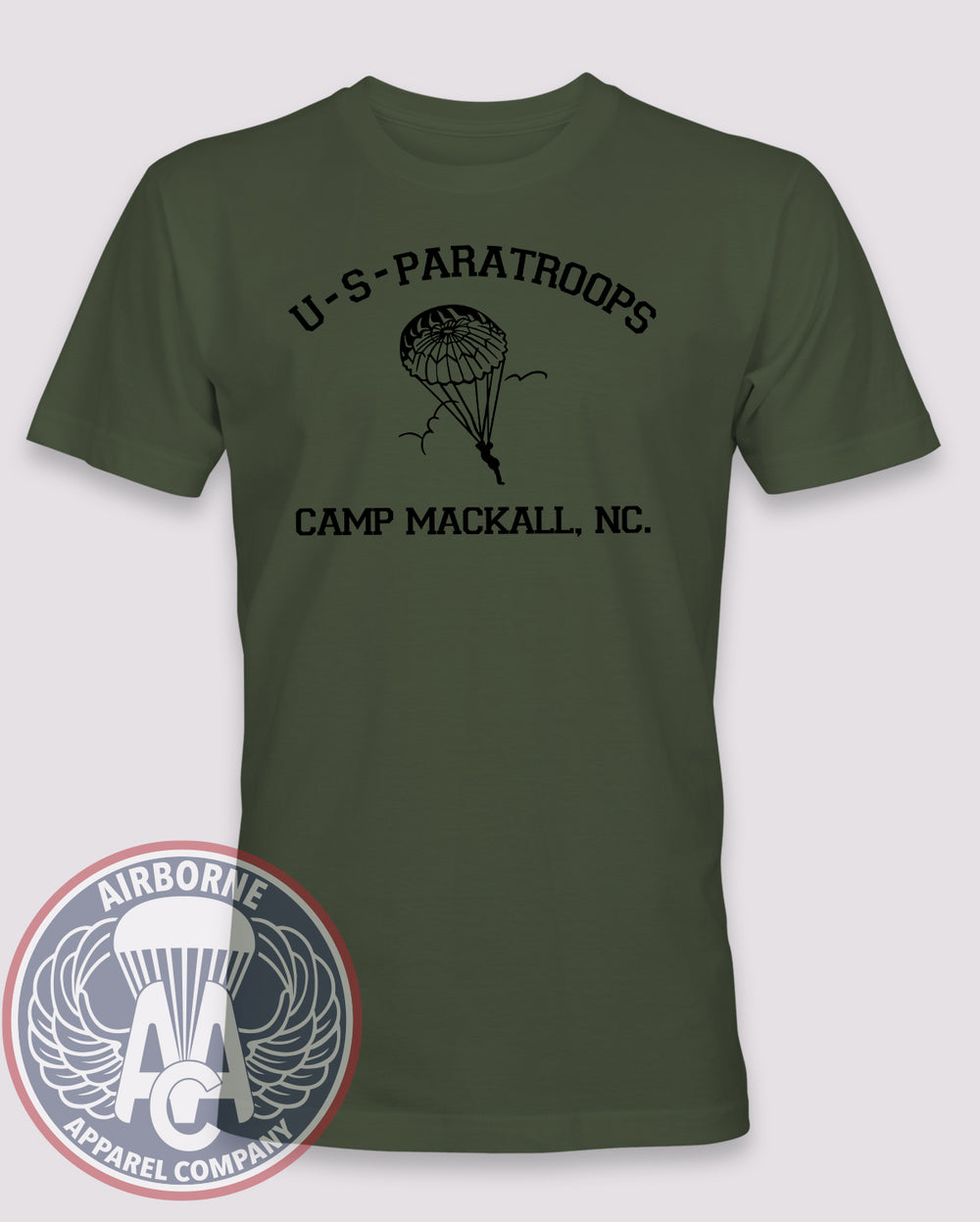


Camp Mackall, North Carolina, connects the Army's World War II airborne experiments with the training of modern Special Forces Soldiers. Its history includes parachute and glider formations, large-scale maneuvers, and demanding field instruction away from the main Fort Bragg cantonment.
World War II Origins
Construction began in 1942 under the name Camp Hoffman. In 1943, the Army renamed the installation for PVT John Thomas “Tommy” Mackall, a paratrooper who died from wounds received during the North African campaign.
The camp became an important airborne training installation. Paratroopers, glider infantry, artillerymen, and supporting Soldiers trained for operations that depended on cooperation between ground forces and troop-carrier aircraft. Camp Mackall's story therefore includes more than parachute jumping alone.
The Knollwood Maneuver
In December 1943, the Knollwood Maneuver tested the ability of an airborne division to land, assemble, and continue operating as a coordinated formation. The 11th Airborne Division played a central role in the exercise. Its results helped sustain the Army's commitment to division-sized airborne forces rather than reducing the concept to smaller independent units.
Special Forces Training and Pineland
After wartime operations ended, Camp Mackall later became a training area associated with Fort Bragg. Army accounts document its use for Special Forces field instruction, including training connected with the Special Forces Qualification Course.
Pineland is the fictional country used in the Robin Sage unconventional-warfare exercise. It is not simply another name for the installation: the exercise extends into a wider training environment involving communities and role players beyond the camp itself.
For veterans, Camp Mackall can represent very different experiences depending on the era—from World War II airborne preparation to the field problems and partner-force work of Special Forces training.
Historical Sources
- Camp Mackall (I-34). North Carolina Department of Natural and Cultural Resources. Camp Hoffman origins, the Mackall namesake, and later training use.
- The Knollwood Maneuver. USASOC History Office, Veritas, 2008. The December 1943 test of division-sized airborne operations.
- Special Forces training facility named for a longtime Camp Mackall official. U.S. Army, 2012. Special Forces schoolhouse use of Camp Mackall.
- Candidates strive to earn Green Beret during Robin Sage exercise. U.S. Army, 2010. Pineland and the wider unconventional-warfare training setting.
Airborne Apparel Company is proud to offer designs celebrating the airborne and Special Forces training heritage of Camp Mackall.